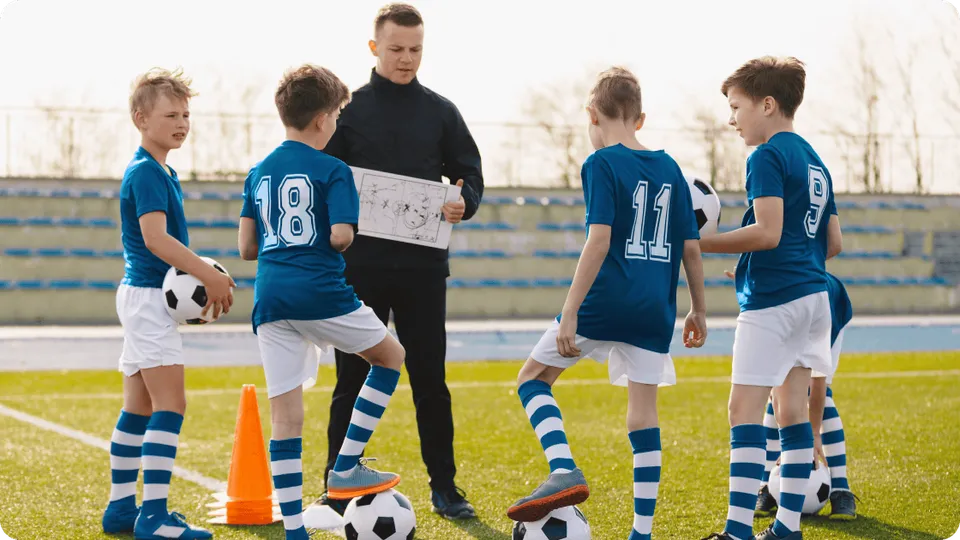
Liga Kompas Gramedia (LKG) is an Indonesian youth football league for players aged 14. Organized by Kompas Daily with support from key partners, the league brings together 16 leading soccer schools across the Jabodetabek area.
Its purpose goes beyond competition. LKG gives young players a structured environment to develop discipline, skill, and competitive experience while helping strengthen Indonesia’s football pipeline.
But the league faced a serious visibility challenge after the Covid-19 pandemic forced a three-year pause from 2020 to 2023. When the 2023/2024 season returned, LKG had to rebuild its social presence, reconnect with its existing community, and convince a wider public that youth football deserved attention.
Suitmedia partnered with Kompas Gramedia between 2023 and 2024 to relaunch LKG across social media. The work combined content strategy, digital advertising, event coverage, player stories, sponsor activations, and a comeback message built around one simple invitation: “Ayok Main Lagi.”
A Respected Youth League Had to Rebuild Its Audience From the Ground Up
1. Three years away had weakened digital momentum
LKG had built a position within Indonesia’s youth football ecosystem, but the pandemic interrupted the league’s regular rhythm.
A long period without competition meant fewer matches to cover, fewer stories to publish, and fewer reasons for audiences to follow the league online. Over time, social channels that had once supported the competition became less active.
When LKG returned for the 2023/2024 season, it could not assume that the previous audience would automatically return. Followers may have changed their interests, become less attentive, or moved on to other football content.
The comeback therefore required more than an announcement. LKG needed to re-establish the habit of following, discussing, and participating in the league.
2. Youth football competes with senior football for attention
Senior football dominates public conversation in Indonesia. It has established clubs, recognizable players, national competitions, and extensive media coverage.
A junior league operates in a different environment. The players are still developing, the audience is often concentrated among families and local communities, and the wider public may not yet understand why the competition matters.
LKG needed to make youth football relevant to people beyond the players themselves.
Parents might care about development and opportunity. Soccer school officials might care about performance and progression. Young players might care about competition, recognition, and the chance to improve. General football fans might need a stronger reason to follow the league.
The communication strategy had to address these different motivations without losing the league’s central identity.
3. Brand awareness needed to become community participation
LKG wanted to increase recognition and encourage active participation around the event.
This required more than showing match results. The league needed to create conversation around the players, the teams, the competition stages, and the people supporting youth football.
An audience becomes more valuable when it does more than view content. It comments, shares, follows the competition, attends activities, discusses performances, and feels connected to what is happening.
LKG needed a social media presence that could turn the return of the league into a shared community moment.
4. The comeback needed a message people could remember
After a long pause, LKG needed a clear way to explain its return.
Suitmedia introduced the tagline “Ayok Main Lagi,” meaning “Let’s play again.” The message worked because it captured both the league’s return and the broader invitation for the football community to reconnect.
It spoke to players, parents, soccer schools, supporters, sponsors, and the public. It also gave the season a consistent emotional idea that could appear across teasers, event content, and match coverage.
The tagline did not simply announce that the league was active again. It invited people to become active with it.
5. Sponsors needed more than logo placement
LKG’s sponsors, including Kacang Garuda, Specs, and AIA, were part of the league’s wider ecosystem.
The social strategy needed to create meaningful ways for sponsors to participate without making the content feel like a series of advertisements.
Sponsor integration had to fit naturally into the football experience. Challenges, player content, expert sessions, and event moments could give partners a role in the story while also creating more engaging material for audiences.
The challenge was to balance commercial visibility with editorial value.
6. The league needed content throughout the season
A single opening announcement would not sustain attention across a full competition.
LKG needed a content system that followed the season from its return through the playoffs, opening, main rounds, closing ceremony, and Gothia Cup selection process.
Each stage created a different communication opportunity. Teasers could build anticipation. Match content could maintain attention. Player stories could humanize the competition. The selection process could introduce a future goal for players and supporters.
The season needed to feel like a continuing story rather than a collection of disconnected posts.
Rebuilding LKG Around Momentum, Participation, and Young Talent
1. We positioned the comeback as a shared return
Suitmedia used “Ayok Main Lagi” as the central message for the 2023/2024 season.
The phrase reflected the league’s return after a three-year pause, but its value extended further. It encouraged players to compete again, families to support the teams, officials to re-engage, and audiences to follow the competition.
This gave the social strategy a consistent emotional foundation. Every content format could answer the same underlying idea: the league is back, and the community has a reason to return with it.
The message also avoided making the comeback feel purely institutional. It was an invitation rather than a corporate announcement.
2. We created a content journey across the full competition
The content plan followed the important stages of the season:
- Comeback teasers created anticipation and reminded audiences that LKG was returning.
- Playoff content introduced competitive stakes and built interest before the main season.
- Opening coverage established energy and marked the official start.
- Main-round content kept audiences connected to teams, players, and results.
- Closing ceremony coverage created a clear conclusion to the season.
- Gothia Cup selection content extended the story toward a future international opportunity.
This sequence helped the audience understand the competition as a developing narrative.
People could enter at different points and still understand what was happening. The league was not only publishing updates; it was building a story that audiences could follow.
3. We made the players and soccer schools central to the content
The league’s most important assets were the young players and the soccer schools that developed them.
Suitmedia created content featuring SSB players and the wider community around the teams. This helped bring the competition closer to the people who were directly involved.
Player-focused content also made the league more relatable. Match results may matter to committed followers, but stories about preparation, ambition, friendship, pressure, and improvement can attract a broader audience.
The approach helped show why youth football deserves attention: it is about people developing, not only scores being recorded.
4. We tailored communication to different audience groups
The league served a varied audience:
- Young players wanted recognition, competition, and inspiration.
- Parents wanted to see development, discipline, and opportunity.
- Soccer school officials wanted to highlight their teams and support player growth.
- Football fans wanted engaging competition and emerging talent.
- Sponsors wanted meaningful association with the league and its community.
The content strategy needed to speak to these groups without creating separate, disconnected narratives.
Player stories could appeal to families and fans. Event highlights could attract broader football interest. Educational and expert content could support development. Sponsor activations could create participation across the community.
The result was a more inclusive social presence.
5. We used live event moments to create digital energy
LKG was not only a digital property. The competition happened on the field, where players, families, officials, coaches, and sponsors were physically present.
Suitmedia translated those real-world moments into social content through event highlights and timely updates.
This helped online audiences feel connected to the competition even when they were not at the venue. It also gave people at the event opportunities to see themselves and their community represented online.
The connection between field activity and digital content made the league feel active and immediate.
6. We used expert and athlete collaborations to broaden relevance
The strategy included activities such as the “Meet the Football Expert” event, featuring challenges with Shannon Moloney.
It also included content featuring national team player Osvaldo Haay, alongside sponsors such as Kacang Garuda and Specs.
These collaborations helped connect young players with broader football inspiration. They also gave the league content that could appeal beyond the immediate soccer school community.
An expert or professional player can help young athletes imagine what development might lead to. This creates a stronger emotional link between today’s competition and tomorrow’s opportunity.
7. We designed sponsor content around participation
Sponsor activations were integrated into the wider content strategy rather than treated as separate advertisements.
Challenges and collaborative content gave sponsors a meaningful role in the league experience. Kacang Garuda, Specs, and AIA could be associated with youth football through activities and stories that audiences could engage with.
This approach increased the value of sponsorship. Visibility was supported by participation and relevance, not only by placing logos beside match content.
For the league, it also created more opportunities to fund and strengthen the competition while keeping the audience experience active.
8. We used multiple platforms for different communication purposes
The social strategy covered Instagram, X, Facebook, and YouTube.
Each channel could support a different type of content and audience behavior:
- Instagram supported visual storytelling, player content, event moments, and short-form engagement.
- X supported timely updates, match conversation, and quick reactions.
- Facebook helped reach parents, families, and broader community audiences.
- YouTube provided space for longer-form event coverage, interviews, and football-related stories.
Using several platforms allowed LKG to reach audiences in different contexts while keeping the central comeback message consistent.
9. We supported organic content with targeted digital advertising
Organic content was essential for authenticity and community connection, but it could not guarantee sufficient reach after a long period of inactivity.
Suitmedia used targeted digital advertising to help distribute important content to wider audiences.
Paid reach supported the comeback announcement, season moments, and selected activations. It also helped LKG reach people who might not yet have followed the league but had an interest in football, youth sports, family activities, or related communities.
The approach combined the trust of community content with the scale of paid distribution.
10. We used engagement as a sign of community reactivation
The project targeted a 5% increase in engagement rate and 30% organic follower growth.
These targets reflected the real challenge facing LKG. The league did not only need to be seen; it needed people to respond and return.
Comments, shares, reactions, and follower growth provided evidence that the audience was beginning to reconnect with the competition.
Engagement became a practical measure of whether LKG’s return was becoming a shared experience rather than a one-way announcement.
From a Quiet Social Presence to a Renewed Youth Football Community
1. LKG regained attention after its three-year pause
The reactivation strategy helped bring LKG back into public conversation.
Teasers announced the return, event content documented the season, and player-focused stories created a stronger connection between the competition and its community.
This helped rebuild the league’s digital footprint after years of inactivity.
The response in comments and other interactions showed that existing followers and new audiences were willing to engage with the return of youth football.
2. Instagram performance exceeded the campaign targets
LKG’s Instagram activity generated 8.105 million impressions and reached 3.177 million users.
These figures exceeded the project targets by more than 120% for impressions and more than 150% for reach.
The results indicate that the combination of content planning, event coverage, audience targeting, and paid amplification successfully expanded awareness beyond the existing follower base.
Reach was important because the league needed to introduce itself again to people who may not have been following during the inactive period.
3. Engagement on Instagram reached 9.1%
The Instagram engagement rate reached 9.1%, exceeding the project’s target.
This suggested that the content was not only being seen but also generating active responses.
The engagement likely benefited from the variety of content formats and topics: player stories, competition stages, event highlights, collaborations, and sponsor activities.
A strong engagement rate also supported the league’s longer-term objective of creating an active community around youth football rather than accumulating passive reach.
4. The Instagram follower base grew to 2,629
The league’s Instagram follower base increased to 2,629.
This created a new foundation for future seasons, announcements, player stories, sponsor activity, and football-related content.
Follower growth is especially meaningful for a league returning after a long interruption. It indicates that the comeback created enough interest for people to choose to remain connected.
The audience could now be re-engaged more efficiently in future communications because the league had rebuilt a direct social channel.
5. Facebook engagement exceeded its target
Facebook engagement reached 5.83%, exceeding the KPI by 4.33 percentage points.
This was relevant because Facebook could help LKG reach parents, families, soccer school officials, and broader community members who might not be as active on Instagram.
The result suggested that the content strategy was working across different audience groups rather than only among younger social users.
6. The content created community dialogue
The project generated positive responses in the comments section across the campaign.
This showed that the audience was not only consuming updates but also participating in conversation around the league.
Community dialogue can strengthen a youth sports brand in several ways. It gives players and families a sense of recognition, encourages supporters to return, and creates feedback that can help the organizers understand what matters to the audience.
The comments became evidence that LKG was rebuilding emotional connection as well as visibility.
7. Sponsor activations became part of the audience experience
The collaborations with Kacang Garuda, Specs, AIA, Shannon Moloney, and Osvaldo Haay gave sponsors and partners visible roles within the league narrative.
These activities helped amplify sponsor visibility while keeping the focus on football, players, and development.
The second-order effect was stronger sponsorship value. Partners were not simply displayed around the competition; they participated in experiences that audiences could remember and discuss.
8. LKG strengthened its position as a youth development platform
The content strategy emphasized the importance of developing young football talent.
By highlighting players, soccer schools, expert sessions, selection opportunities, and the Gothia Cup pathway, the league could communicate a more meaningful role in Indonesian football.
The competition was not presented only as a tournament. It was shown as part of a player’s development journey.
This helped differentiate LKG from senior football coverage and gave the league a stronger purpose for supporters to understand and support.
9. The league created a repeatable model for future seasons
The project established a content framework that could be used in later competitions.
Future seasons could follow a similar structure: announce the return, introduce teams and players, cover key stages, activate sponsors, share expert content, and build toward the closing moments and future opportunities.
This created operational value for Kompas Gramedia. The league now had a clearer way to plan its digital communication before, during, and after competition periods.
What Liga Kompas Gramedia Reveals About Reviving a Dormant Sports Brand
1. A comeback needs more than an announcement
After a long pause, audiences need repeated reasons to believe that the brand is active again.
Teasers create awareness, but regular match content, player stories, event coverage, and community interaction sustain the return.
A comeback is a sequence, not a single post.
2. Youth sports need a broader story than competition results
Scores and rankings matter, but they do not explain the full value of a junior league.
Audiences also care about development, discipline, opportunity, family support, coaching, and the possibility of future progression.
Content that communicates these dimensions can help youth competitions attract attention beyond the players’ immediate circles.
3. Different audiences require different reasons to care
Players, parents, soccer schools, fans, and sponsors do not approach the league with the same expectations.
A strong social strategy identifies what matters to each group and creates content that allows them to see their role in the wider story.
4. Event content gives digital audiences a sense of presence
Sports are experienced in real time and in physical spaces.
Capturing those moments for digital channels helps remote audiences feel connected and gives people at the venue additional reasons to share and participate.
5. Sponsor integration works best when it supports the experience
Audiences respond better when brands contribute to the event or story rather than interrupting it.
Challenges, expert sessions, and player collaborations allow sponsors to become part of the community while still meeting visibility objectives.
6. Paid reach can accelerate community rebuilding
Organic engagement is essential, but a dormant brand may need paid support to reach beyond its existing audience.
Targeted advertising can introduce the comeback to relevant new audiences while organic content builds credibility and connection.
7. Engagement is a stronger revival signal than reach alone
Reach shows that people saw the league. Engagement shows that at least some of them cared enough to respond.
For a returning sports brand, comments, interactions, and follower growth help demonstrate that the community is becoming active again.
8. A clear tagline can unify a complex season
“Ayok Main Lagi” gave the 2023/2024 season one recognizable message.
A strong tagline helps connect teasers, match content, player stories, sponsor activity, and closing communications into one memorable campaign.
Strategic Insights for the C-Suite
- Treat a brand comeback as a sustained narrative.
A dormant brand cannot regain relevance through one announcement. Build a sequence of moments that creates awareness, participation, proof, and reasons to return. - Give youth and community programs a larger purpose.
People engage more deeply when they understand how a competition contributes to development, opportunity, and the future of the sport—not only who won the latest match. - Design communication for every stakeholder in the ecosystem.
Players, parents, officials, fans, and sponsors each need a reason to care. A strong strategy connects their different motivations to one shared story. - Make sponsorship part of the experience.
The strongest partnerships add value through challenges, expert sessions, player stories, or community activities. Visibility becomes more meaningful when audiences can participate in it. - Use paid reach to restart attention, then earn retention organically.
Advertising can help a returning brand reach new audiences quickly. Long-term value comes from content and community interaction that give those audiences a reason to stay.