Giving thousands of salespeople a digital way to grow their business
Columbia, also known as Columbia Cash & Credit, has been a familiar retail name in Indonesia since 1982. The company built its business by selling electronics, furniture, and home appliances through installment payment options and a large network of approximately 6,500 salespeople.
That salesforce remained a valuable commercial asset, but the way customers shopped was changing. More people were discovering products online, comparing options digitally, and using social networks and messaging apps to decide where to buy.
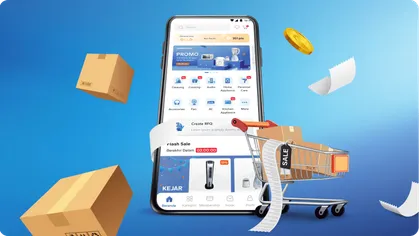
Mitra Bahagia Nippindo partnered with Suitmedia to develop Mise.id, a multi-level e-commerce platform that connected Columbia’s traditional sales model with digital commerce. The platform allowed salespeople to create online stores, promote products through their personal networks, and help customers buy through a simpler digital journey.
A trusted sales model needed to adapt to digital buying behavior
1. Columbia’s reach was strong, but its sales process was still mostly offline
Columbia had a significant advantage in its salesforce. Thousands of salespeople could build relationships with customers, explain products, and guide them through installment purchases.
However, traditional selling methods depend heavily on face-to-face interaction and personal availability. Salespeople must meet customers, carry product information, and rely on physical conversations to create demand.
As consumers increasingly looked online for product discovery, this model became less efficient on its own. The company needed a way to preserve the trust and personal connection of its salesforce while allowing customers to browse and buy digitally.
2. Digital commerce was changing how customers made decisions
Customers shopping for electronics, furniture, and home appliances often compare products before making a purchase. They may look at features, prices, alternatives, and recommendations across several digital channels.
If Columbia’s products were not easy to discover online, salespeople could lose the opportunity to influence customers early in the decision process.
The challenge was therefore not simply to build an online store. It was to connect Columbia’s existing sales relationships with the way customers were now discovering and evaluating products.
3. Mise.id was a new name that needed immediate explanation
The platform itself was unfamiliar to the target audience. Visitors needed to understand what Mise.id was, why it existed, and what they could do there.
If the homepage assumed that visitors already understood the platform, people could leave before exploring products or registering as salespeople. A new digital service needs to establish its purpose quickly.
Mise.id therefore had to communicate its role in simple terms. It needed to show that the platform could help people create an online store, sell products, and participate in a broader sales network.
4. The platform had to serve both customers and salespeople
Mise.id was not designed for only one user group. Customers needed to browse and purchase products, while salespeople needed to create digital storefronts and share product offerings.
These audiences had different objectives. Customers wanted a clear buying experience. Salespeople wanted practical tools that could help them reach their networks and generate sales.
The platform needed to support both journeys without making either one difficult. A customer should not feel that the site was built only for internal sales operations, while a salesperson should not be left without the tools needed to manage digital selling.
5. Simplicity was necessary for adoption
A multi-level commerce platform could easily become complicated. It might include product catalogs, account management, storefront creation, sales tools, social sharing, and communication features.
But salespeople would only use the platform consistently if it was easy to understand. They needed to create and share product offerings without becoming digital commerce experts.
Customers also needed a simple route from product discovery to purchase. Too many steps or unclear navigation could weaken the value of the platform for both sides.
6. The platform needed to use existing relationships as an advantage
Columbia’s salespeople already had personal relationships with friends, family, and local customers. These relationships were a source of trust that a purely anonymous e-commerce platform might not have.
The opportunity was to give each salesperson a digital way to activate those relationships. Instead of asking the company to build all customer traffic through a central website, the platform could allow salespeople to introduce products through their own networks.
This created a different model of digital commerce: technology could extend the reach of personal selling rather than replace it.
7. Product sharing needed to happen where people already communicated
Customers often discuss purchases through social media and messaging applications. Salespeople also use these channels to communicate with people they know.
If sharing a product required copying information manually or switching between multiple tools, the process would become slow and inconsistent. Mise.id needed to make product sharing easy through channels such as Facebook, Twitter, WhatsApp, and Line.
This was a critical commercial requirement. The value of a digital storefront depended on whether salespeople could bring real people to it.
Designing a digital storefront that amplifies personal selling
1. Explain the platform before asking users to act
Suitmedia began by designing a homepage that clearly defined Mise.id.
The page explained what the platform was and why it mattered, then provided a direct call to action encouraging users to create an online store. This reduced uncertainty for people encountering the name for the first time.
The approach followed a basic principle of digital adoption: users need enough context to understand the value of an action before they are asked to take it.
2. Use clear content to answer early questions
The homepage included information designed to help users understand how the platform worked.
This content needed to strike a balance. It had to answer practical questions without overwhelming visitors with detailed explanations before they had developed interest.
Clear introductory content helped turn Mise.id from an unfamiliar name into a more understandable opportunity. Potential salespeople could see how the platform might help them sell, while customers could understand that the site connected them to a broader retail offering.
3. Create a precise call to action for store creation
The platform encouraged users to create an online store.
This call to action was strategically important because the store was the connection between the salesperson and the digital marketplace. Once created, it gave the salesperson a way to present products and share them with potential customers.
A precise call to action also reduced hesitation. Instead of leaving visitors to guess what to do next, the site directed them toward a specific action connected to the platform’s value.
4. Keep the visual structure simple and modern
Suitmedia designed a sleek and modern layout with straightforward navigation.
This was not only a visual preference. A simple layout helped reduce the mental effort required to explore the platform, find products, or understand the next step.
Complex pages filled with too many images, colors, shapes, and competing messages can make an e-commerce site feel like an advertisement rather than a useful shopping environment. The design needed to create confidence and clarity.
5. Organize the experience around product discovery
Users needed to find and buy products without unnecessary difficulty.
The layout was designed to make product exploration more direct. Customers could browse the offerings, while salespeople could use the same product environment to identify items worth sharing with their own networks.
This created a shared foundation for both user groups. Customers saw a digital catalog, while salespeople saw a source of products they could recommend and sell.
6. Make online store creation approachable
The platform gave salespeople a practical way to participate in digital commerce through their own online stores.
This was important because many salespeople may have had strong customer relationships but limited experience operating an online business. The platform needed to make digital participation feel accessible rather than technical.
By simplifying the process, Mise.id could help salespeople move from traditional selling to a blended model. They could continue using personal relationships while adding a digital storefront to their activities.
7. Treat sharing as a core sales function
The platform made it easy for salespeople to share products through social networks such as Facebook and Twitter.
This recognized how people actually sell through relationships. A salesperson’s first potential customers are often people they already know and communicate with regularly.
Sharing tools shortened the path between selecting a product and showing it to a potential buyer. They also helped salespeople maintain a consistent presentation of product information instead of creating their own descriptions from scratch.
8. Extend sharing to instant messaging
Mise.id also supported sharing through WhatsApp and Line.
This was especially relevant because instant messaging allows more personal communication than a public social post. A salesperson could send a product directly to a family member, friend, or customer who might have a specific need.
The feature connected the platform to the salesperson’s existing communication habits. It did not ask users to build a new audience from the beginning; it helped them activate the relationships they already had.
9. Let trust travel through the salesforce
People are often more comfortable buying from someone they know or trust. Columbia’s salespeople had an advantage that anonymous online marketplaces could not easily reproduce: personal credibility.
The platform used digital tools to extend that credibility. A customer could discover a product through a salesperson’s social network or message, then explore the offering through a more structured online experience.
This created a useful combination. The salesperson provided context and trust, while the platform provided convenience, product access, and a clearer buying path.
10. Support a multi-level commercial structure
The platform was designed to support salespeople creating online stores and participating at different levels of the sales network.
This enabled the company to combine central commerce infrastructure with distributed selling. The organization could maintain a common platform while allowing individual salespeople to develop their own customer reach.
A multi-level structure also created room for network expansion. As more participants joined, the platform could extend product access through additional personal and community connections.
11. Connect digital selling with the established retail model
Mise.id was not intended to erase Columbia’s traditional sales model. Its purpose was to strengthen it by giving salespeople a digital channel.
This blended approach recognized that customers may still value personal guidance, especially for higher-consideration products such as electronics, furniture, and home appliances.
The platform allowed the company to preserve relationship-based selling while improving the speed and reach of product discovery. Digital tools became an extension of the salesforce rather than a replacement for it.
12. Create a platform that could support word-of-mouth growth
When salespeople share products with friends, family, and customers, the platform can expand through trusted personal networks.
This creates a form of word-of-mouth distribution. Products are introduced through existing relationships, and each salesperson becomes a potential source of customer acquisition.
The value of this model depends on making sharing easy and the destination credible. Mise.id addressed both by combining simple social distribution with a structured e-commerce experience.
A traditional salesforce gained a practical digital multiplier
1. Mise.id created a clearer introduction to digital selling
The platform explained its purpose and showed users how to create an online store.
This helped reduce the uncertainty associated with a new digital service. Potential participants could understand how the platform supported selling and why it might be relevant to their business.
For Columbia, this created a more organized way to introduce its salesforce to digital commerce.
2. Salespeople gained a digital storefront
The platform gave salespeople a way to present Columbia products online.
This extended their reach beyond face-to-face meetings and physical product discussions. Salespeople could continue using their personal relationships while offering customers a more convenient way to browse products.
The storefront also gave salespeople a stronger professional presence. They could share a structured product experience rather than relying only on individual messages or informal recommendations.
3. Product sharing became faster and easier
Support for Facebook, Twitter, WhatsApp, and Line made it easier for salespeople to bring products into conversations with their networks.
This reduced friction between finding a product and promoting it. A salesperson could share an offer where the customer already spent time, rather than asking the customer to search for the product independently.
The second-order effect was greater reach for each salesperson. One digital storefront could be introduced across multiple personal channels and conversations.
4. Customers gained a more convenient path to products
Customers could discover products online through shared links and then explore or purchase through the Mise.id platform.
This made the buying journey more accessible for people who preferred to research or shop digitally. It also allowed customers to remain connected to the salesperson who introduced the product.
The platform therefore combined convenience with familiarity. Customers gained a digital experience without losing the personal connection that often supports trust in retail.
5. Columbia could blend personal selling with online discovery
Mise.id helped the company move toward a mixed model in which traditional selling and digital commerce supported one another.
This was strategically important because the salesforce remained a major asset. Rather than forcing the company to choose between physical relationships and digital channels, the platform allowed both to work together.
The result was a more adaptable sales system. Salespeople could use digital tools to support conversations, while customers could move between personal guidance and online exploration.
6. The platform strengthened word-of-mouth distribution
The ease of sharing products through personal networks helped Columbia products travel through existing relationships.
This created more opportunities for recommendations to reach people who might be interested in electronics, furniture, or home appliances. Because the message came through someone they knew, the interaction could feel more relevant than a generic advertisement.
The platform turned the salesforce into a distributed discovery channel, increasing the potential reach of the company’s product catalog.
7. The model created a foundation for salesforce expansion
A digital platform that helps salespeople create stores and share products can support future growth in the network.
New participants can join the model, create a presence, and begin reaching their own communities through the same system. This reduces the need to build digital infrastructure separately for each salesperson.
Over time, the network can become more capable. As more people participate, the company gains additional routes to market while salespeople gain access to a shared commercial platform.
8. Mise.id helped make the salesforce more resilient
Traditional sales depend on physical access and direct availability. Digital storefronts allow salespeople to continue presenting products even when an in-person meeting is not possible.
This added flexibility to the business model. Salespeople could communicate with customers through channels that fit changing habits and circumstances.
The broader result was resilience. The company’s ability to sell was no longer tied entirely to physical interaction at a particular place or time.
The deeper lesson: digital commerce can amplify human trust
1. Digital transformation does not always mean removing people
In some retail models, digital commerce is treated as a replacement for salespeople. Mise.id demonstrated a different approach.
The platform used technology to help salespeople reach more customers, share products more efficiently, and manage a digital presence. Human relationships remained central, while technology extended their reach.
2. The best sales tools fit existing behavior
Salespeople already used social media and messaging apps to communicate. Integrating sharing into those channels made adoption more natural.
A platform becomes more useful when it fits the habits of its users rather than asking them to build entirely new routines.
3. A simple storefront can unlock a large network
Creating an online store can feel difficult for an individual salesperson. A shared platform reduces that barrier by providing a common structure, product environment, and sales process.
This allows many people to participate in digital commerce without each person having to build a complete e-commerce operation independently.
4. Trust and convenience should work together
Online shopping offers convenience, but personal selling offers trust and guidance. The strongest model combines both.
Mise.id allowed customers to discover and buy digitally while remaining connected to a salesperson they knew. This reduced the trade-off between human confidence and online efficiency.
5. Sharing is a commercial capability, not just a social feature
Social and messaging tools were central to the sales process. They helped salespeople distribute products, reach personal networks, and create new conversations.
When sharing is directly connected to product discovery and purchase, it becomes part of the commerce infrastructure.
6. Network platforms should create value for every participant
The company gained broader product distribution and a more scalable sales model. Salespeople gained digital storefronts and easier promotion. Customers gained more convenient access to products through trusted relationships.
This mutual value supported the platform’s sustainability. Digital ecosystems grow more effectively when every participant has a clear reason to remain active.
Strategic Insights for the C-Suite
- Use digital tools to amplify existing human strengths. A trusted salesforce can become more powerful when technology extends its reach, improves product access, and reduces administrative effort. Digital transformation does not always require removing the human layer.
- Design commerce around how customers already communicate. Social networks and messaging platforms can become powerful sales channels when product sharing is easy and connected to a clear buying journey.
- Lower the barrier for partners to participate digitally. A shared storefront and simple tools can help thousands of salespeople enter digital commerce without each needing to build their own technology.
- Combine personal trust with digital convenience. Customers often want both guidance and ease. Platforms that preserve the relationship while simplifying discovery and purchase can create a stronger experience than either channel alone.
- Make partner value central to platform adoption. Sales networks grow when participants receive practical benefits, not only when the company gains efficiency. Give partners tools that help them sell more effectively and expand their own opportunities.