Firma KM & Partners saw an opportunity in a process that remained difficult for many businesses: finding credible procurement opportunities across multiple public and private sources.
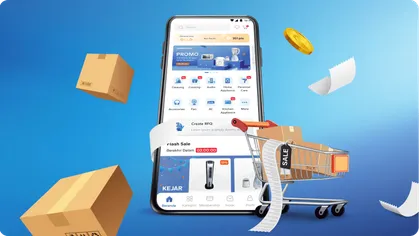
Pengadaan.id, created by Suitmedia and managed by Firma KM & Partners, was designed as a mobile procurement platform that brought tender information, vendor opportunities, learning resources, and professional support into one place.
The platform served two connected audiences. Organizations could use it to discover suppliers and procurement opportunities, while vendors could identify relevant tenders without repeatedly searching across separate systems.
The commercial objective was also clear. Pengadaan.id needed to increase awareness of its business-to-business platform, convert visitors into engaged users, and encourage qualified users to become paid members.
The challenge was therefore not simply to build a mobile application. It was to create a practical, trusted, and useful procurement experience that users would return to regularly.
Procurement Information Was Available, but Not Easy to Act On
1. Tender discovery was spread across multiple sources
Procurement involves more than finding a business opportunity. Users need to understand the requirements, submission deadline, budget, work location, qualification method, and current stage of the tender before deciding whether to pursue it.
That information may exist across multiple public and private procurement services. A vendor searching manually must repeatedly visit different sources, compare opportunities, and remember which tenders require follow-up.
This process creates avoidable effort. It also increases the risk of missing relevant opportunities because users cannot continuously monitor every source with equal attention.
Pengadaan.id addressed this problem by acting as a digital aggregator. Instead of requiring users to search each procurement service separately, the platform brought tender information into a single mobile experience.
2. Relevance was difficult to maintain without personalization
Not every tender is relevant to every vendor. A construction company, technology provider, and consulting firm may search for completely different categories of work, budgets, and locations.
A generic list of all available tenders would create information overload. Users would still need to spend significant time sorting through opportunities that did not match their capabilities.
Pengadaan.id therefore needed to help users define what they were looking for. Relevance had to be built into the experience rather than left entirely to manual search.
The platform needed to allow users to filter tender information according to keywords, procurement sources, categories, budget size, and work location. This would make the home experience more useful from the moment a user began using the app.
3. A list of tenders was not enough to support a decision
A tender title can create initial interest, but it rarely provides enough information to determine whether an opportunity is worth pursuing.
Users need to know when submissions close, what the budget ceiling is, where the work will take place, which stage the tender has reached, and what qualifications are required.
Without these details, users must leave the platform and search elsewhere. That weakens the value of the aggregator and creates more friction in the procurement process.
Pengadaan.id needed to present key tender information in a way that helped users decide quickly whether to monitor, investigate, or ignore an opportunity.
4. The platform needed to become a habit, not a one-time tool
A procurement app has limited commercial value if users open it once, view a few tenders, and then return to other sources.
To support paid membership and long-term engagement, Pengadaan.id needed to provide value beyond basic tender listings. Users needed reasons to return even when they were not actively submitting a bid.
This led to a broader product question: how could Pengadaan.id become a dependable procurement companion rather than only a search interface?
The answer involved combining tender discovery with monitoring, alerts, news, training, legal information, learning resources, and a forum.
5. Awareness and conversion required more than the app itself
The platform also had a brand-building objective. Pengadaan.id needed to attract attention, explain its value, and move interested visitors toward membership.
A mobile application alone would not guarantee discovery. Users needed multiple ways to encounter the brand, understand its purpose, and return to it.
This made the broader digital ecosystem important. Social media and the Pengadaan.id website could support awareness, explain the service, distribute content, and create additional entry points for prospective users.
Designing One Procurement Experience Around Relevance and Repeat Use
1. We focused the product on the user’s first practical question
The core question for a procurement user is not “What data does this platform contain?” It is “What opportunities are relevant to me right now?”
Suitmedia designed Pengadaan.id around that question. The platform allowed users to define their tender preferences so that the homepage could present information aligned with their needs.
Users could configure criteria such as keywords, procurement sources, tender categories, budget ranges, and work locations.
This approach reduced the effort required to begin each search. Instead of starting with a complete and undifferentiated list, users could begin with a more focused set of opportunities.
Personalization also helped the platform feel more useful over time. As users defined their interests, the app could become increasingly relevant to the work they were trying to win.
2. We made tender details useful for decision-making
Pengadaan.id presented tender listings together with the information users needed to assess them.
Each tender could include the submission deadline, budget ceiling, work location, current stage, and qualification method. These details allowed users to make a faster initial judgment about fit and urgency.
The logic was to reduce unnecessary movement between platforms. The more essential information available within Pengadaan.id, the more likely users were to remain in the experience while evaluating an opportunity.
This was particularly important for mobile use. Mobile users often need concise, well-organized information that can be reviewed quickly. The platform therefore had to communicate substance without making the interface difficult to scan.
3. We included search for users who knew what they wanted
Personalized recommendations support exploration, but some users arrive with a specific term, organization, or procurement service in mind.
The search feature allowed users to find tenders, LPSE instances, and related procurement information through keywords.
This gave the platform two complementary paths. Users could receive opportunities based on their saved criteria, or they could actively search when they had a specific objective.
Providing both options helped Pengadaan.id serve different levels of user intent. A user in exploration mode could browse relevant opportunities, while a user with a defined target could move directly toward it.
4. We made monitoring part of the workflow
Procurement opportunities often require follow-up. Users may find a tender before they are ready to act, or they may want to compare it with other opportunities before committing resources.
The monitor feature allowed users to create a personal watch list for selected tenders. This turned the app from a simple discovery tool into a workspace for managing procurement interest.
The value of monitoring is practical. Users do not need to remember every opportunity manually or search for the same tender repeatedly. They can save important tenders and return to them as the submission deadline or tender stage changes.
This also supported deeper engagement with the platform. Once users began organizing opportunities within Pengadaan.id, the app became more connected to their working process.
5. We used messages to make relevance actionable
The messaging feature informed users when a new tender appeared that matched their specified criteria.
This addressed one of the most important limitations of manual procurement searches: users cannot continuously monitor every possible source.
Notifications helped shift the platform from a passive database to a more active service. Instead of waiting for users to check the app, the platform could bring relevant opportunities to their attention.
The principle was not to send more information. It was to send information that matched an explicit user preference.
That distinction protected the usefulness of alerts. Notifications only create value when users believe they are relevant enough to act on.
6. We expanded the platform beyond tender listings
Pengadaan.id included additional features such as news, training, learning content, legal information, and a forum.
These features served two purposes. First, they helped users understand procurement more broadly, including the rules and capabilities required to participate effectively. Second, they gave users reasons to return even when no immediate tender required action.
This was important for building community maturity. A procurement platform can create more lasting value when it helps users improve their knowledge, not only find opportunities.
The broader content environment also strengthened the platform’s membership proposition. Paid membership could be associated with an ongoing source of procurement information and professional support rather than a single search function.
7. We connected the app to a wider digital presence
Suitmedia also integrated the platform with Facebook, Twitter, and Instagram. The goal was to create additional channels through which users could encounter and interact with the Pengadaan.id brand.
Social media allowed the platform to distribute updates, reinforce awareness, and maintain contact with users outside the app.
A dedicated website supported the wider ecosystem by providing a professional public presence, improving search visibility, distributing content, and explaining the platform to prospective users who might discover it through search or social channels.
This multi-channel approach reflected a basic reality of digital adoption: users rarely build a relationship with a service through one interaction or one channel. Repeated, useful contact helps the brand become familiar and gives users more opportunities to return.
8. We kept the experience compact without making it incomplete
The product goal was to make Pengadaan.id simple but functional. This required prioritizing features according to the user’s procurement workflow.
The core experience moved from defining preferences to finding tenders, reviewing details, monitoring opportunities, and receiving relevant updates. Additional content supported learning and retention without replacing the main procurement function.
This balance prevented the platform from becoming an overloaded collection of features. A one-stop solution is only useful when users can still understand where to begin and how the parts connect.
The app’s simplicity was therefore structural, not merely visual. Features were selected and organized around the work users needed to complete.
From Tender Aggregator to Procurement Companion
1. Users gained a more accessible way to find opportunities
Pengadaan.id created one mobile access point for tender and procurement information collected from different public and private sources.
Users could search for opportunities, apply their own criteria, and review relevant details without repeatedly moving between separate procurement services.
This reduced the time and effort required to begin procurement research. It also made the process more accessible for users who needed a practical way to monitor opportunities from a mobile device.
2. Relevance improved the usefulness of the home experience
User configuration made it possible for the platform to reflect different procurement interests.
A user could define preferred keywords, sources, categories, budgets, and locations. The platform could then organize the experience around those choices rather than presenting the same broad list to everyone.
This created a more personal relationship between the user and the platform. Pengadaan.id was not simply showing what existed; it was helping users focus on what mattered to them.
3. Monitoring and alerts supported repeat engagement
The watch list and message features extended the platform’s value beyond the initial search.
Users could save tenders for later review and receive updates when new opportunities matched their criteria. This encouraged a more continuous relationship with the app.
The second-order effect was stronger retention potential. A platform that helps users remember, monitor, and act on opportunities is more likely to become part of their regular procurement routine.
4. Supporting content increased the platform’s practical value
News, training, legal information, learning resources, and forums gave users more reasons to remain engaged with Pengadaan.id.
These features recognized that procurement success depends on more than awareness of tenders. Users also need knowledge, interpretation, preparation, and access to relevant discussion.
By bringing these resources into the same environment, Pengadaan.id positioned itself as a broader source of procurement support.
5. The wider digital ecosystem supported awareness and membership
The mobile application, website, and social media channels worked together to support the platform’s commercial objectives.
Social media created repeated opportunities for interaction. The website helped explain the platform and support search visibility. The app delivered the core procurement experience.
Together, these channels created more paths from awareness to engagement and from engagement toward paid membership.
The result was a stronger foundation for building Pengadaan.id as a recognizable business-to-business service rather than an isolated mobile application.
What This Project Reveals About Procurement Platforms
1. Aggregation only creates value when it reduces decision effort
Bringing information together is not enough. Users need to compare, filter, monitor, and act on that information without unnecessary work.
Pengadaan.id added value by combining aggregation with user configuration, search, tender details, watch lists, and alerts.
The broader lesson is that a centralized data source becomes useful when it helps users make decisions faster and with greater confidence.
2. Personalization should serve a clear job
Personalization can easily become decorative if it does not improve a user’s ability to complete a task.
In Pengadaan.id, user preferences directly shaped which tenders appeared and which messages were sent. Personalization had a practical purpose: reducing irrelevant information.
This is the standard for useful personalization. It should make the user’s work easier, not simply make the interface appear more customized.
3. Retention depends on repeated usefulness
Users return to a platform when it continues to provide value between major transactions.
The combination of tender monitoring, alerts, news, training, legal resources, and forums supported that repeated usefulness. It gave users reasons to open the platform even when they were not immediately submitting a bid.
For B2B products, retention is often built through workflow support and professional relevance rather than entertainment.
4. Community features can strengthen the market, not only the platform
Procurement communities become more mature when participants can access information, training, legal guidance, and discussion in one environment.
These resources can help users better understand the procurement process and participate more effectively. That benefits the individual user while also improving the quality of engagement across the wider market.
A platform that supports capability-building can become more valuable than one that only lists opportunities.
5. Adoption requires an ecosystem of touchpoints
A useful app can still struggle to grow if potential users do not encounter it often enough or understand its value quickly.
The combination of the app, website, and social media created more opportunities for discovery and interaction. Each channel played a different role while reinforcing the same platform proposition.
The lesson is not that every service needs many channels. It is that channel choices should reflect how users discover, evaluate, and return to the service.
Strategic Insights for the C-Suite
1. Build around the decision users need to make.
Aggregation is valuable only when it helps people filter, compare, monitor, and act. Start with the user’s decision process, then determine which information and features are necessary.
2. Make personalization reduce work.
User preferences should directly improve relevance and remove noise. The strongest personalization is not the most visible; it is the personalization that helps users reach the right information faster.
3. Design for repeat usefulness, not one-time transactions.
B2B platforms become durable when they support the work around a transaction. Monitoring, alerts, education, and community resources can create reasons for users to return regularly.
4. Treat adoption as a relationship built across touchpoints.
An app, website, and social channels can each support a different stage of the customer journey. Use them together when they help users discover, understand, and repeatedly engage with the core service.