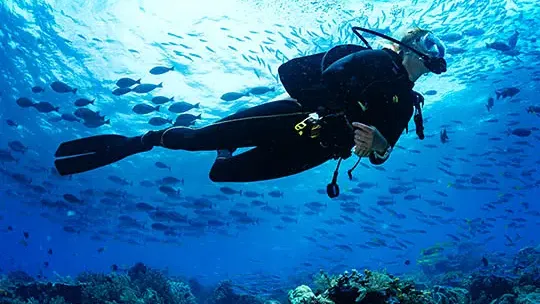
Allindive.com is a Singapore-based travel company offering liveaboard diving packages, including cabin stays and itineraries built around some of the world’s most appealing dive destinations.
For a new travel business, having an attractive product is only the beginning. Potential customers must be able to discover the brand, understand the trip, compare available options, check dates, and complete a booking with confidence.
Suitmedia worked with Allindive.com in 2019 to build a digital platform that could support that entire journey. The website combined destination information, dive spot details, liveaboard options, availability, and payment into one experience.
The ambition was straightforward: make it easier for customers to move from curiosity to commitment. Instead of searching across separate pages or contacting the company for every basic question, users could explore a trip and book it online at any time.
A Strong Diving Product Needed a More Accessible Digital Route to Market
1. A new travel brand had to earn attention before it could earn bookings
Allindive.com entered a competitive travel market with a specialized offering. Liveaboard diving trips appeal to a defined audience, but that audience still needs enough information to trust an unfamiliar provider.
Customers may want to know where the trip goes, which dive spots are included, what the itinerary looks like, what type of accommodation is available, and whether the dates fit their schedule.
For an established travel brand, some of that confidence may come from familiarity. For a newer business, the website must do more of the work.
It has to introduce the brand, explain the product, reduce uncertainty, and make the next action clear. If any of those steps are difficult, potential customers may leave before they reach the booking stage.
2. Diving packages require more context than a standard travel product
A liveaboard trip is not simply a room or a flight. It is a complete experience that combines transportation, accommodation, destinations, activities, schedules, and availability.
That means customers cannot evaluate the offer from a short product title alone. They need to understand how the pieces fit together.
Allindive.com needed a platform that could present the richness of the experience without making the booking process feel complicated. Destination information and dive spot content had to create excitement, while itinerary and availability information had to support practical decisions.
The website therefore needed to balance inspiration and utility. It had to make users want to take the trip and give them the information needed to book it.
3. Fragmented navigation would create avoidable drop-off
Travel websites often lose users through small obstacles. A customer may be interested in a destination but unable to find the relevant itinerary. They may find a trip but struggle to check availability. They may be ready to book but be forced to create an account before continuing.
Each obstacle creates uncertainty and delay. A user who has to search for the next step may decide to leave the platform or compare another provider.
Allindive.com needed a shorter, clearer path from discovery to booking. The website had to help users understand what was available, narrow their options, and complete the transaction without unnecessary administrative work.
4. The platform had to serve customers across devices and markets
Travel customers do not browse only from desktop computers. They may research trips from a phone, tablet, or laptop, often while comparing options across multiple websites.
The experience therefore needed to be responsive and easy to use on different screen sizes. Information had to remain accessible whether users were browsing at home or planning while traveling.
The company also served an international audience. Payment options needed to accommodate different customer preferences and create confidence for people booking from outside Singapore.
This made usability and payment infrastructure part of the commercial proposition, not separate technical concerns.
Designing a Shorter Path From Inspiration to Booking
1. We mapped the essential decisions before designing the interface
Suitmedia began with the core questions a customer needed to answer:
Where can I dive? What does the trip include? Which liveaboard option suits me? When is it available? How do I secure the booking?
These questions formed the foundation of the website’s structure. The platform brought together destination information, dive spot details, trip options, itineraries, availability, and booking.
The intention was to prevent users from having to reconstruct the product across disconnected pages. Each piece of information needed to support the next decision.
This created a more direct user flow. Customers could move from discovering a destination to reviewing a trip and then checking whether they could book it.
2. We made navigation brief without removing useful information
A short user flow does not mean providing less information. It means organizing information so that users can reach the right detail without unnecessary steps.
The website used clear navigation and a simple search system to help users move through the available diving content. Filtering features helped narrow the results and make searches more accurate.
This was important because the platform needed to support different types of visitors. Some users might know the destination they wanted, while others might begin with a general interest in liveaboard diving.
Search and filtering allowed both groups to move toward relevant options. Users could browse broadly when they were still exploring, or narrow their search when they had a specific preference.
3. We connected discovery content to commercial action
Destination and dive spot information served an important role beyond education. It helped customers imagine the experience they could purchase.
A destination page could create interest, but it needed a clear route toward the relevant trip option. Similarly, an itinerary should not be separated from the information that made the destination attractive.
The platform connected these layers so that inspiration could lead naturally to evaluation. Users could learn about the location, review the liveaboard itinerary, check availability, and proceed toward booking.
This connection helped ensure that content was not isolated from the business objective. Every major information area had a relationship to the decision to book.
4. We removed registration as an unnecessary barrier
Users could book as guests without creating an account or signing in first.
This decision addressed a common source of friction in online travel. Customers may be willing to provide the information required for a booking, but they may not want to complete a separate registration process before they understand whether the trip is right for them.
Guest booking reduced the distance between interest and action. It allowed customers to continue when they were ready rather than interrupting the process with an additional requirement.
The choice also reflected a broader principle: ask users for information when it is necessary to complete the transaction, not simply because the system can collect it.
5. We made itinerary and availability central to the booking decision
Liveaboard travel involves dates and schedules that customers must coordinate with their own plans. Availability is therefore not a secondary detail; it is one of the main conditions of purchase.
The website allowed users to select liveaboard trips, review itinerary details, check availability, and secure a booking.
This sequence reduced the need for back-and-forth communication about basic trip information. Customers could make a more informed decision directly through the platform.
It also helped Allindive.com operate more efficiently. When customers can answer initial questions and check availability independently, the business can focus its direct support on more complex requests.
6. We used a light visual interface to reinforce the brand
The interface used a simple, light design with sky-blue tones and beach-related visual elements.
These choices helped communicate the character of the brand at first glance. The visual language connected the website to travel, open water, and diving without overwhelming the information customers needed to read.
The design needed to support both emotion and clarity. Travel decisions are influenced by aspiration, but customers still need to scan itineraries, compare options, and understand booking requirements.
A restrained interface allowed the destination imagery and product information to remain prominent while keeping the journey easy to follow.
7. We designed responsively because travel research is mobile by nature
The website adapted to phones, tablets, and desktop computers.
This was essential for the customer journey. People often research destinations and travel packages on mobile devices, switching between inspiration, comparison, and booking throughout the day.
A responsive design protected the usability of the platform across those contexts. Menus remained accessible, content adjusted to screen size, and the booking path remained available without requiring a desktop computer.
The second-order effect was greater reach. A customer did not need to wait until they were at a computer to explore a trip or begin the booking process.
8. We provided payment options that supported international trust
Allindive.com integrated three payment methods: Stripe for credit card payments, PayPal, and bank transfer.
Offering multiple options addressed different customer preferences and geographic expectations. International customers may be more comfortable using a familiar card processor or PayPal, while others may prefer a direct bank transfer.
Payment choice can influence whether a customer completes a booking. A secure and recognizable payment method reduces uncertainty at the most commercially important point in the journey.
The integrations also supported a more structured business operation through payment notifications and confirmations. This helped create a clearer transaction process for both customers and the company.
From Travel Information to a More Confident Booking Experience
1. The website gave Allindive.com a stronger digital foundation
The platform became an important marketing and sales tool for the new travel business.
It allowed Allindive.com to present its destinations, dive spots, itineraries, and liveaboard packages in one place. This gave the brand a more credible digital presence and made its offering easier for potential customers to understand.
A specialized travel product benefits from a platform that can explain its value in context. The website helped Allindive.com show not only what it sold, but what the customer experience could look like.
2. Customers could move from exploration to booking more efficiently
The website created a clearer path through the customer journey.
Users could browse destinations, review dive spots, compare trip options, examine itinerary details, check availability, and proceed to payment without being forced through unnecessary steps.
This improved convenience and reduced the risk of customers abandoning the platform because they could not determine what to do next.
The value was especially important for customers who were still deciding. They could explore at their own pace while retaining a direct path to action when they were ready.
3. The platform reduced dependence on manual clarification
When essential information is difficult to find online, customers often contact the business for basic questions.
By presenting destination details, itineraries, availability, and payment options in one experience, the website reduced the need for repeated manual explanation.
This did not remove the value of customer support. It allowed support interactions to focus more on special requirements, complex travel questions, and service quality rather than information that the website could provide directly.
That improved operational focus is an important second-order benefit of a well-structured travel platform.
4. Guest booking lowered the barrier to purchase
Allowing customers to book without signing in made the platform more accessible to first-time users.
This was particularly relevant for a new business. Customers who had not yet developed a relationship with Allindive.com were not required to make a long-term commitment before completing a transaction.
The approach respected the customer’s immediate goal. If a user was ready to book a trip, the platform helped them complete that action instead of redirecting them into account administration.
5. Payment choice strengthened credibility across markets
The combination of credit card, PayPal, and bank transfer gave customers more familiar ways to pay.
This helped Allindive.com serve a wider audience and communicate that its booking process was organized and secure.
Payment infrastructure also strengthened the company’s ability to operate as a serious online travel business. A smooth booking experience requires not only attractive content, but a reliable final step.
6. Allindive.com gained a platform that could support future growth
The website created a foundation for future travel packages, destinations, and promotional activity.
Its structure could support the addition of new itineraries and offerings while maintaining the same basic customer journey: discover, evaluate, check, and book.
This gave Allindive.com more than a launch website. It gave the business a digital system that could evolve as its product range and customer base expanded.
What This Project Reveals About Digital Travel Commerce
1. Travel platforms must sell the experience and clarify the transaction
Customers book travel because they want an experience, but they complete bookings only when practical questions are answered.
The strongest travel platforms connect inspiration with useful detail. Allindive.com did this by bringing destination content, dive spot information, itineraries, availability, and payment into one path.
2. Shorter user flows protect commercial intent
Every unnecessary step creates a chance for a customer to leave. A concise journey helps users remain focused on the decision they came to make.
This does not mean removing information or skipping important safeguards. It means removing avoidable effort, such as repeated searching, forced registration, or unclear navigation.
3. Guest checkout is a strategic choice, not only a convenience feature
Requiring an account may help a business collect data, but it can also discourage first-time customers.
Guest booking can be especially valuable when the customer is unfamiliar with the brand and wants to evaluate the service through a first transaction. The business can build trust through the quality of the experience rather than demanding trust at the beginning.
4. Payment flexibility is part of customer experience
A customer’s preferred payment method can vary by location, habit, and level of trust.
Offering recognizable and secure options helps reduce uncertainty at checkout. Payment infrastructure should therefore be considered part of the customer journey from the beginning, not added after the rest of the website is designed.
5. Content should help users decide, not only attract traffic
Destination information is valuable when it moves customers toward a meaningful next step.
Content should answer the questions that stand between interest and action. For Allindive.com, that meant connecting travel inspiration to specific itineraries, availability, and booking.
Strategic Insights for the C-Suite
- Design the digital journey around the customer’s decision sequence.
Start by identifying what customers must know before they can act. Organize content, search, availability, and payment around those decisions rather than around internal departments or product databases. - Remove friction where trust is still forming.
First-time customers should not face unnecessary registration, unclear navigation, or unfamiliar payment processes. Let the quality of the experience earn deeper commitment over time. - Connect inspiration directly to action.
Content creates commercial value when it helps customers move forward. Every destination story, product detail, or promotional message should have a clear relationship to the next decision. - Treat transaction infrastructure as part of the brand.
Secure payment, confirmation, and availability systems shape how customers judge the business. A compelling offer cannot compensate for a booking process that feels uncertain or unreliable.