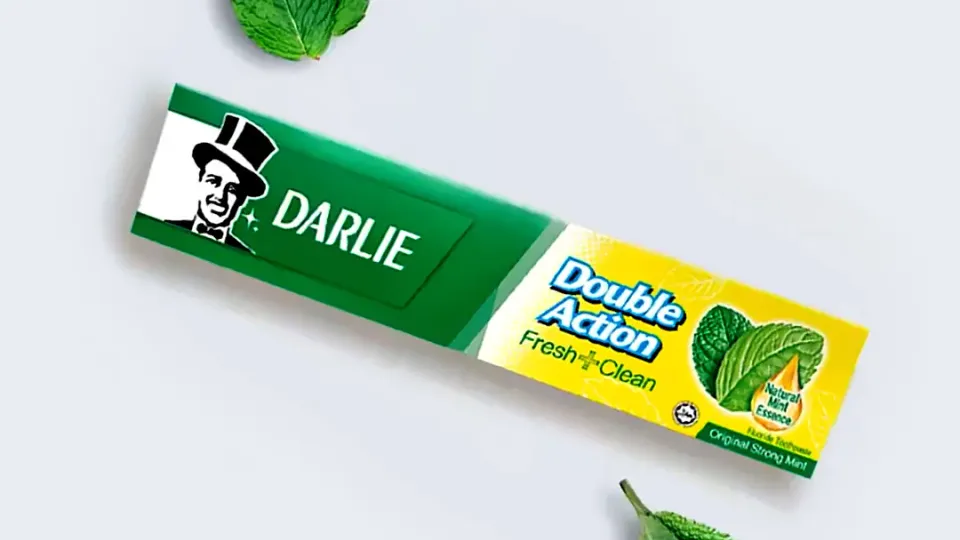

Making double freshness easier to remember
Darlie operates in a crowded toothpaste category where many brands compete around similar promises: cleanliness, protection, freshness, and everyday confidence. In that environment, having a product difference is not enough. Consumers need to notice it, understand it, and remember it when they are ready to buy.
Darlie’s distinctive proposition was its double mint and double freshness. The challenge was to translate that product characteristic into a digital identity that felt relevant, engaging, and easy for consumers to recall.
Suitmedia worked with Darlie on the #KembaliPD #PakaiDarlie campaign, combining social media content, digital activation, and key opinion leaders to strengthen awareness. The objective was to make Darlie’s promise more visible while giving audiences repeated and engaging reasons to interact with the brand.
A clear product difference was competing for limited attention
1. The toothpaste category offered little room for passive differentiation
Toothpaste is a familiar product category. Consumers often make decisions quickly, based on habit, availability, price, packaging, or a benefit they already understand.
That creates a difficult environment for a brand trying to establish a distinctive position. A claim such as “freshness” can easily blend into the wider category unless it is expressed in a way that feels specific and memorable.
Darlie needed to make double mint and double freshness more than a product description. The proposition had to become a recognizable reason to think about the brand.
2. Awareness needed to lead to memory
The goal was not simply to make consumers see Darlie content. Exposure only creates value when it helps build recognition and recall.
For Darlie, the audience needed to connect the brand with a particular feeling and benefit: returning to daily activities with greater confidence, supported by a stronger sense of freshness.
This required repeated communication, but repetition alone could become predictable or easy to ignore. The campaign needed enough variation to hold attention while returning consistently to the same central message.
3. The brand had to speak to both broad and targeted audiences
Darlie wanted to reach a wide consumer base while also remaining relevant to its priority audience. These two objectives can pull communication in different directions.
Broad reach requires messages that are easy to understand and widely relatable. Targeted relevance requires content that reflects the interests, habits, and language of specific audience groups.
The campaign therefore needed a flexible content system. The core proposition had to remain consistent, while the execution could adapt across platforms and audience contexts.
4. Digital channels created opportunity and complexity
Social media gave Darlie access to a large and active audience, but it also increased competition for attention. Consumers encounter many messages every day, and most content receives only a brief opportunity to make an impression.
The campaign needed to work across different digital formats and moments. Content had to be noticeable enough to stop scrolling, simple enough to understand quickly, and relevant enough to encourage a response.
This made execution as important as strategy. A strong brand proposition would have limited impact if it was not translated into content that people wanted to watch, react to, and share.
5. The campaign needed to connect brand activity with measurable response
Darlie needed more than creative output. The company also needed to understand whether the campaign was expanding reach, creating impressions, and encouraging engagement.
Measurement helped connect digital activity to the broader business objective of building awareness. Reach showed how widely the message traveled. Impressions indicated the volume of exposure. Engagement revealed whether people were responding rather than simply passing through.
The challenge was to create attention that could be observed and evaluated without reducing the campaign to numbers alone.
Translating freshness into a campaign people could recognize
1. Build the campaign around one clear brand idea
Suitmedia developed the #KembaliPD #PakaiDarlie campaign to connect Darlie with renewed confidence and the act of returning to everyday activities.
The campaign gave the product proposition a broader human context. Double freshness was not communicated only as a functional feature; it was linked to how consumers might feel after using the product.
This helped make the message easier to remember. Instead of asking audiences to retain a technical description, the campaign connected the benefit to a familiar emotional outcome: feeling ready to face the day.
2. Keep the core message consistent across executions
The campaign repeatedly reinforced Darlie’s ability to provide double freshness through double mint.
Consistency was essential because brand memory develops through repeated associations. If each piece of content communicated a different promise, the campaign could generate attention without building a clear position.
The strategic discipline was to allow creative variety while protecting the central meaning. Different formats and activations could create new reasons to engage, but they still needed to lead back to the same product and brand association.
3. Use creative content to prevent repetition from becoming predictable
Suitmedia combined different creative content and digital activations across Darlie’s platforms.
This approach recognized that audiences respond to more than one format. Some people may engage with visual content, others with short-form messages, interactive activity, or creator-led communication.
Variety helped sustain attention over the campaign period. It also allowed Darlie to express the same core idea in multiple ways, increasing the chance that different audience groups would find an entry point that felt relevant.
4. Give the proposition an active, contemporary expression
The campaign was designed to attract attention rather than simply publish product information. The message of returning to confidence gave the brand a more active role in the consumer’s daily life.
This was important because personal care products are often connected to how people present themselves in social situations. Darlie could therefore communicate freshness as something that supports confidence and readiness, not only as a sensory product attribute.
The approach made the product promise more relatable without losing its connection to the toothpaste itself.
5. Use key opinion leaders to add reach and credibility
Key opinion leaders were included as part of the campaign. Their role was to help introduce Darlie’s message to audiences through voices that already had attention and influence within relevant communities.
This extended the campaign beyond Darlie’s owned social media presence. Creator participation could make the message feel more native to social platforms and more connected to the interests of specific audience groups.
The value of this approach depended on alignment. The creators needed to support the campaign’s central proposition rather than introduce a separate message that weakened brand clarity.
6. Combine brand activation with ongoing social communication
The campaign did not treat activation and social media as separate activities. Digital content helped build awareness around the activation, while activation created material and reasons for further social engagement.
This combination allowed the campaign to move in both directions. Social channels could attract attention and explain the message, while participation could generate additional conversation and exposure.
The result was a more connected digital system. Instead of relying on one major moment, Darlie could build awareness through multiple interactions over time.
7. Design content for both exposure and response
The campaign aimed to increase reach and impressions, but it also needed audiences to react. Engagement became an important signal that the content was creating more than passive visibility.
Comments, reactions, shares, and other forms of response can indicate that people found the content relevant enough to acknowledge or pass along. These behaviors also help extend the message through personal networks.
The campaign therefore balanced two needs: communicate the brand at scale and give people a reason to respond.
8. Monitor performance throughout the campaign
Suitmedia tracked campaign performance across Darlie’s social media platforms, including reach, impressions, and engagement rate.
This allowed the team to see how the campaign was performing over the five-month period and identify when engagement was strongest. The data provided evidence of whether the communication was gaining attention and how actively audiences were responding.
Measurement also supported better judgment. Strong results could show which direction was resonating, while weaker results could signal the need to adjust content, format, or distribution.
Large-scale exposure became active audience response
1. The campaign reached a substantial audience
Over the last five months of the campaign, Darlie generated 49.9 million impressions and reached 9.4 million people across its social media platforms.
These figures demonstrate that the campaign successfully expanded the visibility of Darlie’s message. The brand’s proposition reached a broad audience rather than remaining limited to existing followers or a narrow consumer group.
For a category where brand choice is often habitual, this level of exposure created more opportunities for Darlie to enter consumers’ consideration.
2. Exposure was supported by meaningful engagement
Darlie’s campaign achieved an engagement rate of approximately 17.4% during the same five-month period.
This result suggests that the audience was not only being exposed to the content, but was also responding to it. Engagement provided evidence that the campaign’s creative expression and activation mechanics were relevant enough to encourage interaction.
This distinction matters. A campaign can achieve broad distribution without creating a meaningful connection. The engagement level indicated that Darlie’s message was generating active audience response as well as visibility.
3. Engagement peaked during the campaign period
The highest engagement rate reached 44.4% in March.
A peak of this level shows that some campaign moments or content combinations resonated particularly strongly with the audience. It also demonstrates the value of monitoring performance over time instead of evaluating the campaign only through an overall average.
Understanding when and why engagement rises can help the brand improve future planning. Strong moments can reveal which topics, formats, creator contributions, or activation elements are most effective at turning attention into response.
4. Darlie’s product proposition became more visible
The campaign helped reinforce Darlie’s association with double mint and double freshness.
This was the central strategic outcome. The brand was not simply increasing activity on social media; it was using that activity to make a specific product difference easier to recognize.
By connecting freshness with confidence through the #KembaliPD #PakaiDarlie platform, Darlie gained a clearer and more emotionally relevant way to express its value.
5. Social media became a stronger brand-building channel
The campaign showed that social media could support more than short-term announcements. It could help establish a brand proposition through repeated content, creator participation, activation, and audience response.
This created a stronger digital foundation for Darlie. Future campaigns could build on a clearer understanding of how to communicate the brand’s difference and how to measure audience behavior.
The second-order effect was greater brand flexibility. Darlie could continue evolving its content while retaining a consistent association with confidence and freshness.
6. Audience activity strengthened the path toward top-of-mind awareness
Top-of-mind awareness is built through repeated, distinctive, and relevant associations. The campaign contributed to all three.
Repeated exposure increased familiarity. The double-freshness proposition provided distinction. The confidence-led campaign idea made the message more relevant to consumers’ everyday experiences.
While social metrics cannot by themselves prove a permanent change in brand preference, the results showed that Darlie had created strong conditions for greater recognition and recall.
The deeper lesson: a product claim becomes valuable when people can remember why it matters
1. Distinctiveness must be translated into a human benefit
“Double mint” and “double freshness” describe the product, but consumers are more likely to remember what those qualities help them feel or do.
The campaign connected freshness with returning confidence. This gave the functional proposition a human consequence and made it easier to integrate into everyday consumer situations.
2. Repetition works when the meaning remains consistent
Building awareness requires repeated exposure, but repeating the same execution can quickly lose attention.
Darlie combined consistency of message with variety of content and activation. This allowed the brand to reinforce the same association without making every interaction feel identical.
3. Reach and engagement answer different questions
Reach indicates how many people encountered the campaign. Impressions show the volume of exposure. Engagement indicates whether people responded.
A strong campaign should track all three because each reveals a different part of performance. Reach without response may indicate limited relevance, while engagement without sufficient reach may limit the scale of brand impact.
4. Creators should extend the brand idea, not replace it
Key opinion leaders can help a campaign enter communities with greater credibility and cultural relevance. But their contribution is strongest when it makes the brand proposition clearer rather than distracting from it.
The strategic role of creators is to add trust, context, and distribution while preserving the central brand meaning.
5. Campaign measurement should improve future decisions
The value of performance data is not limited to reporting what happened. Peaks, patterns, and differences across content can help the brand decide what to repeat, refine, or discontinue.
This creates a learning cycle. Each campaign can make the next one more precise, more relevant, and more efficient.
Strategic Insights for the C-Suite
- Turn functional product differences into memorable human benefits. Consumers may not remember technical claims on their own. Connect the product feature to a feeling, behavior, or everyday outcome that matters to them.
- Protect one clear brand association across many executions. Creative variety can attract attention, but consistency builds memory. Every format and partnership should strengthen the same central meaning.
- Measure both distribution and response. Reach and impressions show how far a message traveled, while engagement shows whether people found a reason to react. Together, they provide a more complete view of brand-building performance.
- Use creators as extensions of the brand, not substitutes for it. Influential voices can improve relevance and reach when they express the brand idea in a credible way. Their role should strengthen recognition rather than introduce competing meanings.
- Treat every campaign as a learning system. Performance peaks and audience behavior should shape future decisions. The strongest marketing organizations turn measurement into a continuous improvement process, not a final report.