Expedia already had the core ingredients of a strong travel brand: global reach, hotel and flight deals, local promotions, and a mobile application designed to help people plan trips more conveniently.
The challenge was making those advantages visible and relevant in Indonesia. Travelers had many online choices, and Expedia needed to strengthen awareness, engage customers more actively, and encourage more people to use its mobile app.
Suitmedia partnered with Expedia in 2012 to develop social campaigns that connected online interaction with physical participation. The work centered on two activations: Expedia Yellow SunCase and Expedia Travel-Mate.
Both campaigns used photo-based participation, Facebook integration, and clear incentives. The first strengthened brand visibility through an offline event. The second connected social engagement directly to the Expedia mobile app.
Together, the campaigns helped Expedia turn passive awareness into measurable participation, generating 60,000 Facebook likes, reaching 50,000 fans, and producing approximately 1,800 user engagements each week.
A Recognized Travel Brand Still Needed Local Attention
1. Global credibility did not automatically create local engagement
Expedia was already a leading global online travel company. It helped customers discover hotels, flight deals, local promotions, and other travel offers across countries and destinations.
However, international recognition does not guarantee strong engagement in every market. Indonesian travelers had access to many competing travel platforms, each offering its own promotions, content, and booking tools.
Expedia needed to build a stronger local presence. It had to give Indonesian audiences a reason to interact with the brand, remember it, and consider it when planning or booking a trip.
This required more than publishing promotional messages. The brand needed to appear in the customer’s everyday social environment in a way that felt timely, visible, and easy to join.
2. Awareness needed to lead somewhere useful
Increasing brand awareness was only one part of Expedia’s objective. The company also wanted to increase engagement and grow usage of its mobile application.
These goals were connected but not identical. Someone might recognize Expedia without downloading the app. Someone might download the app without becoming an active user. A campaign that generated likes but did not move people closer to the product would have limited commercial value.
The campaigns therefore needed a clear relationship between attention and action. Participants should have a reason to interact with Expedia, and the interaction should reinforce a relevant brand behavior.
For Yellow SunCase, that behavior was public participation and sharing. For Travel-Mate, it was discovering and using the Expedia mobile app.
3. Travel is social, visual, and experience-led
Travel decisions are often shaped by images, stories, recommendations, and personal experiences.
People share where they go, what they discover, and how they spend time with friends or family. This makes photo-based campaigns a natural way to create interaction around a travel brand.
But a photo contest still needs a strong reason to participate. The activity must be simple to understand, the reward must feel relevant, and the brand should be visible without making the experience feel like an advertisement.
Expedia needed campaign mechanics that allowed people to express themselves while connecting their participation to the brand.
4. The digital campaign needed physical presence
Social media could extend reach, but offline participation could make the brand more tangible.
An event such as Car Free Day created an opportunity for Expedia to meet people in a public, active environment. The physical setting gave the campaign energy and helped participants create content that could then move through their own social networks.
This created a two-way flow. Offline activity generated material for online sharing, while Facebook and other social channels extended the reach of the physical campaign.
The strategic question was how to use both environments together rather than treating social media and offline activation as separate efforts.
Connecting Brand Visibility With a Reason to Act
1. We used participation instead of one-way promotion
Suitmedia designed campaigns that asked audiences to do something rather than simply receive a message.
This approach was important because participation produces a deeper interaction than passive exposure. When users take a photo, upload it, mention a feature, or share content, they spend more attention with the brand and often introduce it to people in their own networks.
The campaigns also created a more human form of brand communication. Expedia appeared through personal travel-related behavior rather than only through a formal advertisement.
This helped the company become part of a social experience—an important step for a travel brand seeking to build familiarity and preference.
2. Yellow SunCase made the brand visible in a public setting
The Expedia Yellow SunCase campaign centered on Expedia’s recognizable yellow case.
Participants were invited to take photos with the case during a Car Free Day event and share those photos on their social media accounts. The campaign created a simple connection between a physical brand symbol, a public activity, and online participation.
The choice of Car Free Day supported the campaign in several ways. It placed Expedia in a high-traffic environment associated with movement, leisure, and public participation. It also gave people a natural setting in which to take and share photos.
The campaign rewarded the winner with a hotel voucher from Horison Hotel, Seminyak Bali. This reward was directly connected to travel, making it more relevant than a generic prize.
The structure was simple: see the brand, take part, share the experience, and compete for a travel-related reward.
3. The physical symbol helped people remember the campaign
The yellow case gave the activation a recognizable object that could appear consistently in participant photos.
In a crowded social environment, a clear visual symbol helps connect separate posts back to the same brand. Participants may have created different images, but the case gave the campaign a shared identity.
This mattered because user-generated content can otherwise become disconnected from the company that initiated it. The physical prop helped preserve Expedia’s presence while allowing participants to express the campaign in their own way.
The second-order effect was greater memorability. People were not only seeing the Expedia name; they were seeing it associated with a distinctive object and a shared public experience.
4. Travel-Mate connected participation directly to the mobile app
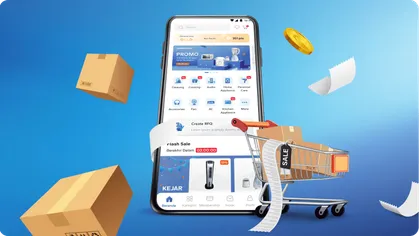
The Expedia Travel-Mate campaign addressed a more specific business goal: increasing mobile app downloads and usage.
Participants were asked to upload a photo showing the Expedia mobile app on their mobile devices and describe their favorite app feature.
This changed the nature of the campaign. The mobile application was no longer a product mentioned in a message; it became part of the participation requirement.
The campaign also encouraged users to articulate what they liked about the app. That created a stronger interaction than simply asking people to download it. Participants had to open the application, identify a feature, and communicate its value in their own words.
This helped connect product discovery with social proof. Potential users could see real participants demonstrating and discussing the app.
5. We made the product benefit part of the conversation
Travel-Mate did not rely only on the existence of the app. It invited users to talk about their favorite features.
That was strategically useful because mobile applications can be difficult to communicate in abstract terms. A brand may say an app is convenient, but users are more likely to understand its value when they see how someone uses a specific feature.
The campaign therefore created a form of peer explanation. Participants communicated what they found useful, while Expedia gained additional visibility for the app’s role in travel planning.
This approach helped move the campaign from simple download acquisition toward product understanding.
6. We integrated the campaigns with Expedia’s Facebook presence
Both campaigns were connected to Expedia’s Facebook fan page.
At the time, Facebook provided an important environment for building an audience, distributing campaign content, collecting participation, and maintaining an ongoing relationship with users.
The fan page acted as a central point where campaign activity could accumulate. People could encounter the brand through the event, follow the campaign online, see participant content, and remain connected after the activity ended.
This was important for building continuity. A campaign should not disappear once the contest closes. A social channel gives the brand a place to continue sharing offers, travel information, and future activities.
7. We designed incentives around the category
The Yellow SunCase campaign offered a hotel voucher from Horison Hotel, Seminyak Bali.
A travel-related reward reinforced Expedia’s core category and made the prize meaningful to the audience. It encouraged participation while also reminding people what the brand helped them do: discover and experience destinations.
The incentive was therefore part of the message, not only a mechanism for increasing entries.
When the reward is aligned with the product category, it can strengthen the association between participation and the brand’s broader value.
8. We linked offline energy with online reach
The campaigns used offline moments to generate online activity.
The Car Free Day event created an environment for participation, while social media allowed the resulting content to reach people who were not physically present. Travel-Mate used mobile devices as both the subject of the contest and the bridge to digital engagement.
This integration allowed Expedia to create more touchpoints without requiring every audience member to experience the campaign in the same way.
Some users participated directly. Others saw the content through friends or the Facebook page. Still others became aware of the app through the campaign’s social discussion.
From Campaign Exposure to Stronger Brand and App Engagement
1. Expedia built a larger social audience
The campaigns helped Expedia reach 60,000 Facebook likes.
This growth gave the brand a larger base for future communication. An audience built through participation can become valuable beyond one campaign, provided the brand continues to give people relevant reasons to remain connected.
The audience also created a stronger distribution channel for future travel deals, local promotions, app updates, and destination content.
2. Campaign content reached a wider group of potential customers
The activations reached 50,000 fans and generated approximately 1,800 user engagements each week.
These figures show that the campaigns created sustained interaction rather than only a brief spike in attention.
Engagement is particularly relevant for a travel brand because purchase decisions may happen later. A customer might interact with a campaign today, remember Expedia during a future travel search, and then use the app when planning becomes more immediate.
The campaign therefore helped create the conditions for future consideration, not only immediate response.
3. Yellow SunCase strengthened the link between Expedia and travel experiences
The first campaign helped Expedia become more visible through a public, participatory moment.
The yellow case served as a recognizable brand symbol, while the hotel voucher connected participation to an actual travel benefit.
This made the campaign more than a promotional exercise. It associated Expedia with movement, leisure, social activity, and the possibility of a future trip.
4. Travel-Mate helped make the app more tangible
The mobile app campaign helped increase downloads by showing the application in use and asking participants to discuss its features.
This was valuable because it reduced the distance between brand awareness and product understanding. Users could see that Expedia’s mobile app was not just an extension of the brand; it was a practical tool for finding travel opportunities.
The campaign also created user-generated explanations that could help others understand why the app was worth trying.
5. The campaigns created a repeatable model for future activity
The work gave Expedia a campaign structure that could be adapted for future objectives.
The brand could use public events to generate attention, social participation to extend reach, category-relevant rewards to motivate action, and product-centered campaigns to support app adoption.
This model was more durable than a single advertisement because it connected awareness, interaction, and product use.
What Expedia Reveals About Turning Social Activity Into Business Value
1. Awareness is stronger when it is attached to behavior
A person may notice a logo and forget it. A person who takes a photo, uploads it, discusses an app feature, or follows a campaign has invested more attention.
The Expedia campaigns created that investment through simple actions that fit naturally with travel and social media behavior.
The broader lesson is to define what you want people to do after noticing the brand. Awareness becomes more valuable when it creates a measurable next step.
2. Product adoption should be demonstrated, not only announced
Travel-Mate helped users understand the mobile app by showing it in real use and inviting people to discuss its features.
This is more persuasive than simply stating that an app is useful. Demonstration gives potential users a clearer picture of how the product fits into their own behavior.
3. Offline activations can strengthen digital campaigns
Physical events provide energy, visibility, and human interaction. Digital channels provide scale, continuity, and sharing.
The strongest campaigns use each environment for what it does best. Expedia used the offline setting to create participation and social media to extend the experience beyond the event.
4. Rewards should reinforce the brand proposition
A hotel voucher supported Expedia’s travel positioning more effectively than an unrelated prize would have.
Category-aligned rewards do more than motivate participation. They remind audiences what the brand can help them achieve.
5. Social audiences are an asset only when relationships continue
Growing a fan base is an important outcome, but the long-term value comes from what happens afterward.
Brands need to continue serving the audience with relevant content, useful offers, and reasons to engage. Otherwise, the audience may remain large but become inactive.
Strategic Insights for the C-Suite
- Turn awareness into a behavior you can observe.
A logo impression is difficult to connect to business value. Participation, app use, content sharing, and product exploration create clearer signals that audiences are moving closer to the brand. - Make product adoption part of the campaign experience.
If a campaign objective is app usage, design participation around the app itself. Let audiences see, use, and explain the product rather than relying only on promotional claims. - Combine physical reach with digital continuity.
Offline activations create memorable human experiences, while digital channels extend them to people who were not present. Use both when the business needs visibility and ongoing engagement. - Align incentives with the value you want the brand to own.
A relevant reward can reinforce the brand’s category and strengthen memory. Incentives should not only drive participation; they should also remind customers why the brand matters.