Giving deal-seekers a faster route to relevant offers
Groupon is a global e-commerce marketplace that connects millions of subscribers with local businesses through offers on activities, travel, products, and services across more than 28 countries. Groupon Indonesia, established in 2010 and formerly known as Groupon Disdus, operated in a market where e-commerce competition was becoming increasingly intense.
Customers had more online choices, and marketplace brands were competing not only on price but also on how quickly and conveniently people could discover relevant offers. Groupon needed a stronger mobile presence to remain visible, improve customer access, and support online sales.
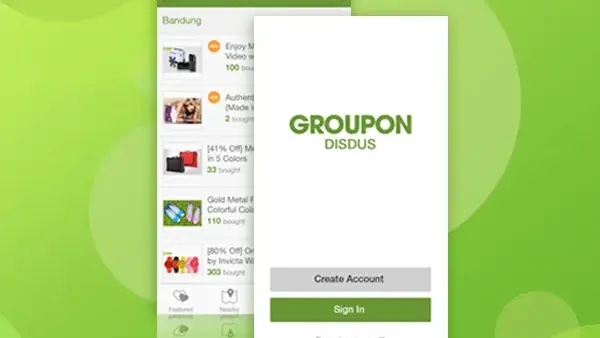
Suitmedia developed a mobile application that brought Groupon’s time-sensitive deals into a more convenient, personalized, and location-aware experience. Users could find nearby offers, popular deals, low-priced products, and travel discounts while receiving notifications about new opportunities.
A strong deals marketplace needed to win the mobile moment
1. E-commerce competition was making convenience a differentiator
Groupon operated in a crowded market with major e-commerce players competing for the same customers.
Price and product range were important, but they were not enough to guarantee attention. Customers could switch between marketplaces easily, so the experience that helped them find a relevant deal fastest could influence where they chose to shop.
Groupon needed to make its value visible in the moments when customers were looking for savings, ideas, or spontaneous purchases.
2. Customers were shifting from mobile browsers to apps
Users increasingly preferred accessing familiar shopping platforms through mobile applications rather than mobile browsers.
An app could provide a more direct experience. It could remember user preferences, support faster access, and send notifications when relevant deals became available.
For Groupon, mobile was especially important because its offers were often time-sensitive. Customers needed to discover a deal quickly enough to act before it expired or lost relevance.
3. Deals were valuable only when customers could find the right one
Groupon offered many categories, including local activities, goods, services, travel, and hotel-related deals.
That variety created opportunity, but it could also create choice overload. Customers might not want to browse the entire marketplace. They might want a nearby offer, a popular deal, a low-price item, or a travel discount.
The app needed to help users narrow the marketplace according to their immediate intent.
4. Location mattered to local offers
Many Groupon deals were connected to local businesses and nearby activities.
A customer’s location could determine whether an offer was practical. A restaurant deal in another city or an activity too far away might not be useful even if the price was attractive.
The mobile experience needed to make nearby deals easier to discover. Location could become a filter that connected digital browsing with real-world convenience.
5. Time-sensitive offers required timely communication
Deals can lose value quickly. A customer may miss an offer if they do not know it exists or discover it after the sale ends.
Groupon needed a way to notify users about relevant offers at the right moment. Notifications could create urgency and bring users back to the app without requiring them to search manually.
But notifications also had to remain useful. If users received too many irrelevant messages, they might disable them or stop engaging with the platform.
6. The app had to support both browsing and immediate action
Some customers browse for inspiration, while others open Groupon with a specific purchase in mind.
The app needed to support both behaviors. It had to make popular offers easy to explore while also helping users move quickly toward a deal when they already knew what they wanted.
This required a clear balance between discovery and direct access.
7. Login should not become a barrier
Mobile commerce depends partly on reducing friction. If registration and login take too long, users may abandon the app before exploring deals.
Groupon wanted to make access easier through Facebook login, reflecting a familiar sign-in behavior for many users at the time.
A simpler login process supported faster entry into the marketplace and reduced the effort required to begin browsing.
8. Groupon needed stronger mobile engagement to support sales
The broader objective was not simply to launch an app. Groupon wanted to improve its digital presence and online sales in a competitive market.
The application needed to create more opportunities for users to discover, return to, and purchase deals.
This made engagement features commercially important. Location-based discovery, deal categories, notifications, and simple login all contributed to a shorter path from awareness to purchase.
Designing the app around how people look for deals
1. Make mobile the primary entry point for deal discovery
Suitmedia developed a mobile application designed to give Groupon customers faster access to limited-time offers.
The app was positioned as a practical shopping companion. Users could open it when they wanted to browse, receive a notification when a relevant deal appeared, or search for an offer near them.
This created a more direct relationship than a mobile browser experience alone could provide.
2. Put nearby deals within easy reach
The application included features that helped users find nearby deals.
This connected the digital marketplace to local activity. Customers could discover offers that were more likely to fit their immediate location and lifestyle.
Nearby discovery also improved the usefulness of Groupon’s local business model. The app helped turn geographic proximity into a reason to engage.
3. Create a destination for the hottest deals
The app highlighted the hottest deals of the day.
This helped customers who wanted to know what was most popular or time-sensitive without browsing every category.
The section also created a sense of urgency and momentum. Users could open the app and immediately see what other people were paying attention to.
4. Make low-price products easier to browse
The application included lists of low-price products.
This addressed a common customer motivation: finding an attractive offer quickly. Users could browse based on price rather than searching through the full product catalog.
Clear price-led discovery supported Groupon’s value proposition and gave customers a simple reason to explore.
5. Organize travel deals as a distinct experience
Travel deals provided access to hotel and travel-agent discounts.
Travel purchases often involve different considerations from local goods or daily activities. Customers may be planning a trip, comparing accommodation, or looking for a package rather than seeking an immediate local deal.
A dedicated travel area helped users find relevant offers without filtering through unrelated products. It also presented Groupon as a broader marketplace rather than only a local discount service.
6. Use categories to reduce browsing effort
The app’s deal categories gave users clearer ways to approach the marketplace.
Categories helped customers move from a broad interest to a more relevant set of options. They also reduced the burden of interpreting every deal individually.
This structure was important because a marketplace’s value can be undermined by too much choice. The app needed to make variety feel manageable.
7. Use notifications to bring deals to customers
Built-in notifications helped Groupon inform shoppers about limited-time sales and relevant offers.
Notifications created a direct route back to the marketplace. Users did not need to remember to open the app every day to discover what was new.
The feature also supported urgency. A notification could alert a customer while an offer was still available, increasing the chance of timely action.
8. Balance urgency with relevance
Time-sensitive offers can benefit from notification, but excessive messaging can damage the experience.
The app needed to use notifications as a service rather than an interruption. Users should receive information that was relevant to their shopping interests or location.
This protected trust. A customer is more likely to respond positively when notifications help them find value rather than simply demand attention.
9. Use Facebook login to shorten onboarding
The application used Facebook login to make it easier for users to sign in.
This reduced the number of steps required to access Groupon’s deals and supported faster adoption. Customers could begin exploring the marketplace without creating a lengthy new registration process.
Simpler login also supported repeat use. When returning to the app was easy, customers had fewer reasons to abandon it between visits.
10. Design for quick scanning
Deal-seekers often compare several offers before deciding. The interface needed to make price, location, category, and offer relevance easy to understand at a glance.
A scannable design allowed users to move through lists quickly and open the deals that interested them most.
This was essential for mobile. Smaller screens provide less space for information, so hierarchy and concise presentation had to do more work.
11. Keep the path from offer to action short
Once a user found a relevant deal, the app needed to support a clear next step.
The design reduced unnecessary barriers between discovery and purchase consideration. Customers should not have to leave the app or repeat their search after deciding to explore an offer.
A shorter path protected the momentum created by a limited-time deal.
12. Use the app to create a repeat shopping habit
Nearby deals, daily highlights, low-price products, travel offers, and notifications created multiple reasons for users to return.
A customer might open the app for a nearby activity one day and browse travel offers another day. The variety of entry points supported regular use.
This was important for long-term growth. Groupon needed to become part of how customers discovered opportunities and savings, not just a platform they visited for one campaign.
13. Make the experience useful in different shopping contexts
Some users might be planning a purchase at home, while others might be looking for something to do nearby.
The app’s combination of location, deal categories, and notifications allowed it to serve both planned and spontaneous shopping behavior.
This flexibility increased the range of situations in which Groupon could be relevant.
14. Build a foundation for future personalization
The app created opportunities to understand what users searched for, which categories they explored, and how they responded to notifications.
These signals could support future improvements in recommendations and communication.
The more accurately the app could match deals to user interests and contexts, the more useful it could become over time.
Groupon gained a stronger mobile route to customer attention
1. Customers gained easier access to Groupon’s marketplace
The mobile application gave users a direct way to browse and discover offers.
This improved Groupon’s availability in the moments when customers were using their phones to shop, compare, or find local activities.
The app strengthened the company’s digital presence without requiring users to navigate through a mobile browser each time.
2. Deal discovery became more relevant to location and intent
Nearby deals, hot offers, low-price products, and travel categories gave users several ways to narrow their search.
This reduced the effort required to find something useful. Customers could begin with the context most relevant to them instead of browsing the entire marketplace.
The result was a more focused and convenient shopping experience.
3. Notifications supported timely engagement
Push notifications helped Groupon reach customers while limited-time offers were still available.
This created more opportunities for users to return and act on relevant deals. The marketplace could remain present in customers’ daily routines rather than waiting for them to remember to visit.
4. The app strengthened Groupon’s local commerce model
Location-based deal discovery helped connect Groupon’s digital marketplace with local businesses and activities.
Customers could find offers that were not only affordable but also practical to use in their area.
This supported Groupon’s role as a bridge between subscribers and local businesses.
5. Travel deals expanded the platform’s use cases
The dedicated travel deal experience allowed users to explore hotel and travel-agent discounts within the app.
This broadened Groupon’s relevance beyond local daily purchases. Customers could use the platform for both immediate activities and future travel planning.
The broader marketplace created more reasons for users to return.
6. Simpler login reduced the first-use barrier
Facebook login made it easier for customers to enter the application.
Reducing onboarding effort supported adoption and allowed users to reach the deal experience more quickly.
The feature also improved convenience for returning users, who could access the platform without repeating a long registration process.
7. The app made the value proposition more visible
Groupon’s core promise was access to attractive deals. The mobile app made that promise easier to experience through daily highlights, location-based discovery, low-price lists, travel offers, and notifications.
The interface did not require customers to understand the full marketplace before seeing value. They could open the app and immediately discover a relevant reason to continue.
8. The platform supported stronger online sales potential
The mobile experience created better conditions for browsing, engagement, and purchase consideration.
The case study does not provide proprietary sales or conversion figures, but the app directly addressed key drivers of mobile commerce: ease of access, clear discovery, timely communication, and shorter paths to relevant offers.
This strengthened Groupon’s ability to compete for customer attention and online transactions.
9. Groupon gained a more flexible channel for future growth
The app provided a foundation for future features such as personalized deals, improved recommendations, loyalty programs, and richer local discovery.
The platform could evolve as Groupon learned more about user behavior and market needs.
The long-term value was greater than the initial feature set. Groupon gained a mobile foundation for continued customer engagement.
10. Customer and business value could reinforce one another
Customers received easier access to savings and local experiences. Groupon gained more opportunities to connect customers with merchants and drive digital activity.
This mutual value supported the marketplace model. The more useful the app became to customers, the more effectively it could serve local business partners.
The deeper lesson: deal platforms must make relevance immediate
1. Customers do not want to browse everything
Large marketplaces can overwhelm users if they present the full range of offers without guidance.
Nearby deals, popular offers, low-price lists, and travel categories create useful starting points. Relevance helps customers find value faster.
2. Mobile commerce should respect limited attention
Users often browse on the move and make decisions quickly. The interface needs to communicate the key facts without requiring long reading or complex navigation.
A clear mobile hierarchy can improve both satisfaction and commercial performance.
3. Notifications should deliver timely value
Deal platforms have a natural reason to use notifications because offers may expire. But the notification must remain relevant to avoid becoming noise.
The strongest approach balances urgency with user preference and context.
4. Location turns a generic offer into a practical opportunity
A discount is more valuable when it is available where the customer can actually use it.
Location-based discovery helps connect digital browsing with real-world action and strengthens the marketplace’s relevance to local businesses.
5. Onboarding is part of conversion
Customers who face unnecessary registration steps may never reach the deal experience.
Simple sign-in reduces friction at the beginning of the relationship and increases the chance that users will explore and return.
6. Categories should reflect customer intent
Users may search by place, price, product type, activity, or travel need.
Providing several natural entry points helps customers use the marketplace in ways that match how they think, rather than forcing them into one search behavior.
7. Marketplace growth depends on repeat usefulness
A deal app cannot rely only on one attractive offer. It needs a steady stream of reasons to return.
Daily highlights, local discovery, travel planning, and personalized communication help create a habit around finding value.
8. Customer convenience improves partner value
When customers can discover and act on deals more easily, local businesses receive greater exposure and demand.
The platform should therefore be evaluated from both sides: how well it serves subscribers and how effectively it connects them with merchants.
Strategic Insights for the C-Suite
- Make relevance immediate in a crowded marketplace. Customers should be able to find something useful quickly through location, price, popularity, or category. Convenience is a meaningful competitive advantage.
- Treat mobile as a primary commerce channel. Apps can provide faster access, notifications, and repeat engagement that browser-only experiences may not support as effectively. Design around the moments when customers actually shop.
- Use notifications as a service, not an interruption. Time-sensitive offers justify timely communication, but relevance and user context must guide frequency. Trust declines when every message feels promotional.
- Reduce onboarding friction before trying to increase engagement. Simple login and clear first-use paths help more customers reach the value of the marketplace. Conversion begins before the first purchase decision.
- Design for both sides of the marketplace. Better discovery helps customers find savings while increasing visibility and demand for local businesses. The strongest platforms create value for users and partners together.