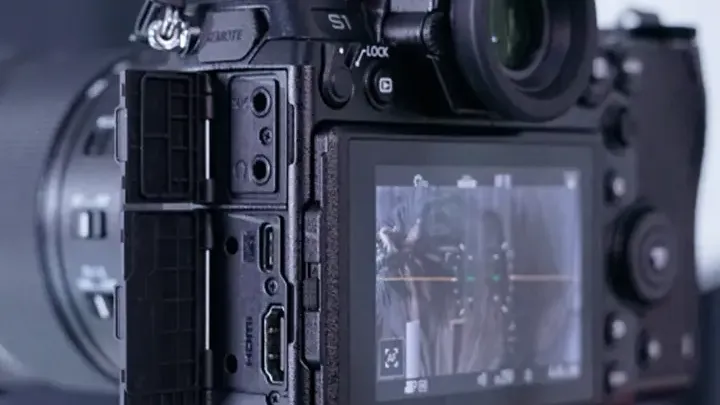
Lumix is Panasonic’s digital camera brand, serving everyone from casual photographers to filmmakers and professional visual creators. Its products are designed to help people capture stories, experiment with new formats, and turn creative ideas into finished work.
Panasonic Young Film Maker (PYFM) was created to support that ambition in Indonesia. Launched in 2015, the biennial competition invited amateur and independent filmmakers between 15 and 30 years old to develop their skills and submit original work.
For the 2019 edition, the theme was #KolaborasiTanpaBatas, or “collaboration without limits.” The campaign needed to do more than collect film submissions. It had to make young creators aware of the competition, explain how to participate, showcase their work, and connect them with learning opportunities.
Panasonic partnered with Suitmedia to develop a dedicated microsite that turned PYFM into an accessible creative platform rather than a simple competition form.
A Valuable Creative Opportunity Needed a More Inviting Entry Point
1. The competition had a strong purpose but needed wider participation
PYFM was designed to support Indonesia’s emerging creative talent. By opening the competition to amateur and independent filmmakers, Panasonic created an opportunity for young people to develop their skills without needing professional experience.
This openness was important. Many aspiring filmmakers may have ideas and enthusiasm but lack formal industry access, professional networks, or confidence in their own ability.
However, an inclusive competition can still be difficult to join if the digital experience is unclear or intimidating. Potential participants need to understand who can enter, what categories are available, how to submit work, what the prizes are, and when the important deadlines occur.
The microsite had to make the opportunity feel achievable from the first visit.
2. The audience was young, visual, and comfortable with digital participation
PYFM targeted filmmakers between 15 and 30 years old. This audience was likely to discover opportunities through digital channels and assess them quickly through visual presentation.
The microsite needed to communicate energy and creativity without becoming confusing or overly formal.
At the same time, the competition involved a serious submission process. Participants needed clear instructions and reliable access to information, not only an attractive campaign page.
This created a design tension. The platform had to feel inspiring enough to attract young creators while remaining structured enough to guide them through registration and submission.
3. The theme required more than a campaign slogan
The 2019 theme, #KolaborasiTanpaBatas, expressed an idea about creative cooperation and different perspectives.
But a theme becomes meaningful only when the experience allows people to act on it. The microsite needed to support collaboration indirectly by creating a shared environment where participants could submit work, view other entries, join workshops, and learn from previous winners.
The platform therefore had to make creativity visible and connected. Participants should not experience PYFM as a private form submission. They should see that they were joining a wider creative movement.
4. Film competitions involve several kinds of information
A competition website needs to support multiple user questions:
- Who is eligible to participate?
- What are the competition categories?
- How do I register?
- What must I submit?
- What are the prizes?
- Where can I see other submissions?
- Can I learn from past winners?
- Are there workshops I can join?
If these answers are scattered or difficult to locate, interested users may postpone participation or abandon the process.
The microsite needed to organize practical information, creative inspiration, and community activity within one coherent experience.
5. The competition also had an educational role
PYFM was not only a contest. It was part of Panasonic’s broader support for Indonesia’s creative industry.
The workshops held in major cities were an important part of that role. They gave aspiring filmmakers an opportunity to learn, connect, and build confidence before or during the competition.
The website therefore had to serve both entrants and the wider public. Participants needed competition information, while anyone interested in filmmaking should be able to discover and join the workshops.
This expanded the platform from a submission channel into a learning and community resource.
Designing a Microsite That Made Participation Feel Possible
1. We began with the participant’s journey
Suitmedia structured the microsite around the sequence a potential entrant would naturally follow.
First, users needed to understand the purpose and theme of PYFM. Next, they needed to confirm their eligibility and explore the categories. After that, they needed to learn how to register, submit their work, and understand the prizes.
The website structure followed this decision path rather than organizing information around internal campaign administration.
This helped reduce uncertainty. Users could move from inspiration to action without repeatedly searching for basic information.
2. We used visual quality to attract the right audience
As a film competition, PYFM needed a visual identity that communicated the quality and ambition of the work being invited.
Suitmedia used strong, professional imagery and a clean interface to create a platform that felt credible to young filmmakers.
The visual design had an important psychological role. Participants are more likely to trust a competition when the platform appears carefully made and treats creative work seriously.
The website needed to suggest that submissions would be seen in a meaningful environment—not simply uploaded into an anonymous form.
3. We chose a monochrome palette to balance energy and seriousness
The microsite used shades of gray, along with black and white, to create a monochrome visual language.
This choice supported the competition’s creative positioning. It felt contemporary and flexible, while avoiding a visual style that was too childish or overly corporate.
The monochrome palette also allowed submitted films, promotional visuals, and other creative assets to become the visual focus.
The design communicated that the platform was a professional space for emerging creators while remaining accessible to a younger audience.
4. We made the competition process easy to understand
The structure of the microsite provided step-by-step guidance for registration and submission.
This was one of the most important design decisions because the quality of the creative idea would not matter if users could not complete the entry process.
The platform clearly presented how to participate, what materials were required, and what users could expect after submitting their work.
Breaking the process into understandable steps reduced the mental effort involved in joining. It also helped prevent avoidable mistakes caused by unclear instructions.
5. We organized submissions by category
The “2019 Submission” page allowed users to browse submitted works according to competition categories:
- Short Movie.
- Online Video.
- 2019 Special Category.
This gave the competition a visible public dimension. Submissions were not hidden from the community; they could be explored and understood within the structure of the competition.
Category-based organization also helped users compare work within a relevant context. A visitor interested in short films could focus on that category, while another could explore online video or the special theme.
6. We made participant work part of the experience
Showing submissions was important for more than visibility.
It helped potential participants understand the type of work being submitted and imagine themselves contributing to the competition. It also made the campaign feel active and populated.
A competition can appear uncertain when visitors see only rules and forms. Showing actual entries creates proof that other people are participating and that the platform is a living creative environment.
This supported a positive participation loop. More visible work could encourage more interest, which could lead to more submissions and broader community engagement.
7. We connected the competition to learning opportunities
The microsite included information about workshops held by Lumix in major cities across Indonesia.
This extended the value of PYFM beyond the competition itself. Participants could learn more about filmmaking, while members of the wider public could join the workshops through a clear “Join Workshop” action.
The workshop page gave the initiative a more open and inclusive character. Someone who was not ready to submit a film could still participate in the creative community through learning.
This also reinforced Panasonic’s role as a supporter of creative development, rather than a brand interested only in product promotion.
8. We provided access to previous winners
The microsite allowed users to view the 2017 PYFM winners and watch their videos.
This served several purposes. It demonstrated the quality of work associated with the competition, gave potential entrants a reference point, and showed the continuity of PYFM across editions.
Previous winners also provided creative inspiration. Participants could see how other filmmakers had approached the competition and understand the level of storytelling that had already emerged from the program.
At the same time, the content helped establish PYFM as an ongoing platform with a history—not a one-off campaign.
9. We designed for both entrants and observers
Not every visitor would arrive with the intention to submit a film.
Some might be fans of Lumix, members of the filmmaking community, workshop attendees, past participants, or simply people interested in Indonesian creative work.
The microsite therefore needed to support multiple levels of engagement. Users could read about the competition, watch past winners, browse submissions, join workshops, or proceed to registration.
This broader structure increased the platform’s usefulness and helped the campaign reach beyond the group of people who were ready to enter immediately.
10. We made the microsite part of Lumix’s broader creative ecosystem
PYFM existed within Lumix’s wider relationship with photographers, videographers, and visual storytellers.
The microsite reinforced that relationship by giving emerging filmmakers a place to create, share, learn, and connect.
This strengthened Lumix’s position as a brand that supports creative ambition. The camera was present in the background as an enabling tool, but the platform centered the users and the stories they wanted to tell.
That distinction made the experience more audience-focused and more credible.
From Competition Page to Creative Community Platform
1. PYFM became easier for young filmmakers to understand
The microsite gave potential participants a clear explanation of the competition, its theme, categories, submission process, and prizes.
This reduced the effort required to decide whether to participate and helped make the opportunity feel more accessible to amateur and independent filmmakers.
The platform translated a broad creative invitation into a practical set of next steps.
2. The design made the competition feel more credible
The professional visual treatment and monochrome interface gave PYFM a stronger identity.
For emerging filmmakers, the quality of the platform communicated that their work would be taken seriously. The website created a more appropriate environment for creative submissions than a basic campaign form would have provided.
This supported Panasonic’s brand image while preserving the competition’s youthful and open character.
3. Submissions created visible evidence of participation
The 2019 Submission page allowed visitors to see the range of work being entered.
This made the campaign more dynamic and gave participants a public context for their work. It also helped potential entrants understand that they would be joining a community of other young creators.
The visibility of submissions could support a stronger sense of momentum as the competition developed.
4. Workshops widened access to the initiative
The workshop section created another path into PYFM and the Lumix creative community.
People did not need to submit a film to benefit from the program. They could join a workshop, learn from practitioners, and begin developing their creative interests.
This widened the campaign’s reach and reinforced its role in supporting the broader creative industry.
5. Past winners provided inspiration and proof
The 2017 winners gave the 2019 audience a tangible example of what the competition could produce.
Their videos demonstrated the quality, ambition, and variety of work associated with PYFM.
This helped reduce uncertainty for new participants. They could see the type of creative expression the platform supported and use previous work as a reference without being required to imitate it.
6. The platform supported collaboration as an actual experience
The #KolaborasiTanpaBatas theme became more credible because the platform created multiple forms of connection:
- Participants could see one another’s work.
- The public could engage through workshops.
- New filmmakers could learn from previous winners.
- Emerging creators could use the competition to enter a broader community.
The website did not define collaboration narrowly. It created a setting where different creative perspectives could be discovered and connected.
7. Lumix strengthened its relationship with the next generation of creators
The microsite helped Panasonic communicate with young filmmakers through an opportunity that was relevant to their ambitions.
Instead of speaking only about cameras, Lumix supported the activity its audience cared about: making films and developing creative skills.
This created a stronger basis for long-term brand relationships. Young creators could encounter Lumix as a supporter of their journey, not only as a manufacturer of equipment.
What Lumix PYFM Reveals About Creative Campaign Platforms
1. A competition website should reduce uncertainty at every step
Creative people need freedom in what they make, but they still need clarity about how to participate.
Eligibility, categories, deadlines, submission requirements, prizes, and workshop details should be easy to locate.
Clear structure allows participants to focus their energy on the creative work rather than administrative confusion.
2. Visual quality is part of participation design
For a photo or film competition, the website’s visual presentation influences how seriously users take the opportunity.
A strong visual environment can reassure participants that their work belongs in a professional and thoughtfully managed space.
3. Showing participant work creates momentum
A competition becomes more compelling when users can see that others are already contributing.
Displaying submissions creates social proof, encourages browsing, and can motivate new participants to join.
4. Education expands the reach of a competition
Workshops help serve people who may not yet be ready to enter.
They lower the barrier to participation by giving aspiring creators a way to learn first. This can help the competition build a wider and more mature creative community over time.
5. Past work gives new participants a useful reference
Previous winners help establish continuity and demonstrate the quality of the program.
They inspire users without needing to dictate a single creative style. Participants can see what is possible and then find their own interpretation.
6. Brand purpose is stronger when it is expressed through user opportunity
Panasonic’s support for young filmmakers became more credible because Lumix created a practical platform for people to develop and share their work.
A brand’s commitment to creativity is most convincing when audiences can experience that commitment directly.
Strategic Insights for the C-Suite
- Make participation feel achievable from the first interaction.
Creative campaigns attract more people when eligibility, process, categories, and next steps are immediately clear. Remove administrative uncertainty so participants can focus on their ideas. - Use the platform to create social proof.
Visible submissions, previous winners, and community activity show potential participants that the program is active and credible. Proof of participation can be as persuasive as promotion. - Extend competitions into learning ecosystems.
Workshops and educational content allow people to engage before they are ready to compete. This broadens reach and helps build a stronger, more capable community. - Let visual quality communicate respect for the audience.
A well-designed platform tells creators that their work matters. In creative categories, the quality of the digital environment is part of the brand experience. - Turn brand purpose into a practical opportunity.
If a brand claims to support creativity, provide a place where people can create, learn, share, and progress. Purpose becomes credible when users can experience it directly.