
The Hidden Business Inside Air Conditioner Rentals
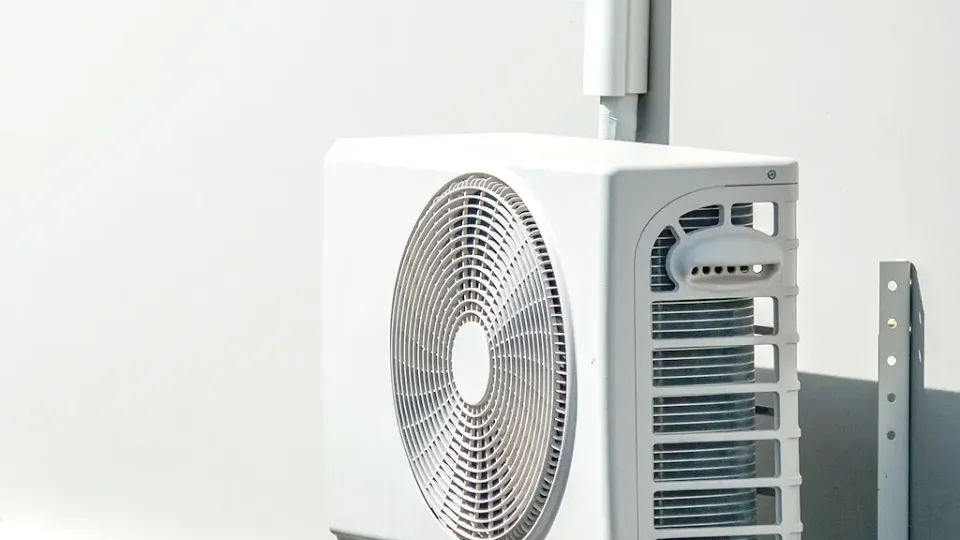
Sthira Nusantara rents and services air conditioners. On the surface, that's straightforward: a customer needs cooling, Sthira delivers it, maintains it, and takes it back.
But that's not actually the business.
The real business is logistics. Coordination. Getting the right technician to the right location at the right time with the right parts. Managing hundreds of requests across dozens of locations. Tracking who did what, when, and whether the customer is satisfied.
For a company serving convenience store chains like Alfamart and Indomaret—retailers with multiple locations and unpredictable needs—logistics wasn't a support function. It was the core operation.
And Sthira was managing it manually.
The Cost of Invisible Operations
Sthira's business model had a built-in vulnerability: the more successful they became, the more requests they received, and the more likely their manual processes would break.
1. Requests Became Orders That Got Lost
A convenience store manager needed an air conditioner serviced. They called Sthira. Someone took the note. Somewhere, a technician was assigned.
But somewhere between the call and the assignment, information could vanish. Was the job actually assigned? Did the technician have the address? Did they know what parts they'd need?
A lost request meant an unhappy customer and a missed revenue opportunity.
2. Technicians Worked Without Visibility
Sthira's technicians were deployed into the field with paper notes or phone instructions. They traveled to locations, did the work, and reported back—sometimes.
What actually happened at each job? How long did the service take? What parts were used? Was the customer satisfied? Without systematic tracking, Sthira couldn't answer these questions.
Information was trapped in technicians' heads instead of flowing back to operations.
3. Customers Existed in Uncertainty
A retail manager submitted a request for AC service. Then what? When would someone arrive? Was the request even received?
Without a communication platform, customers had no way to track their request's status. They had to call back and ask. Each call took a technician away from fieldwork.
4. Operations Couldn't See Their Own Business
Sthira's leadership had no visibility into daily activity. How many service requests came in today? How many were completed? How many are pending? Where are the bottlenecks?
Without this visibility, they couldn't optimize technician deployment, anticipate resource needs, or identify which customers were at risk of churn.
The business was happening, but it was happening invisibly.
5. Growth Created Crisis Instead of Opportunity
Sthira was growing. More convenience store chains wanted service. More locations needed rentals. But manual processes don't scale.
The more successful Sthira became, the more likely something would fall through the cracks. A missed appointment. A forgotten follow-up. A miscommunicated timeline.
Growth became a liability instead of an asset.
Building Two Platforms, Solving One Problem
Sthira's challenge wasn't just speed. It was an information flow. Requests needed to move from customers to technicians to operations to customers again, creating closed feedback loops instead of disappearing into manual chaos.
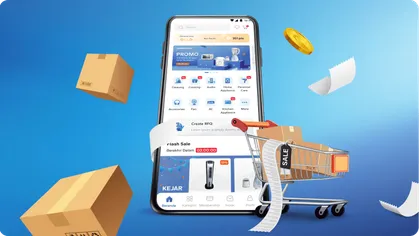
The solution required two separate platforms working as one system: a website for customers to submit requests and track progress, and a mobile app for technicians to receive, execute, and report on jobs.
1. The Customer Portal: Making Requests Systematic
Suitmedia developed a website where convenience store managers and retail customers could submit AC requests in three categories: AC Rental, AC Service for Rental Customers, and AC Service for Non-Rental Customers.
But the website wasn't just a form. It was a communication channel.
When a customer submitted a request, they provided critical information: what they needed (rental or service), where it was needed (specific location), when they needed it (date and time), and any special requirements.
The system immediately confirmed receipt. The customer knew their request was in the system, not lost in someone's notebook.
2. Real-time Status Tracking: Visibility Reduces Anxiety
As Sthira processed the request, the customer could see what was happening. Request received. Assigned to technician. Technician en route. Service completed.
This sounds like a convenience feature. It's actually a reduction in customer friction. When customers know what's happening, they stop calling to ask. When they stop calling to ask, your technicians spend more time working and less time answering phones.
Push notifications kept customers informed without requiring them to log in and check. The system reached out to them.
3. The Technician App: From Notes to Data
While customers tracked progress on the website, Sthira's technicians operated from a mobile app designed specifically for fieldwork.
The app showed each technician their daily job list. Not scattered across multiple jobs—a clear queue of where they needed to go, in what order, with complete context.
For each job, the technician could see the customer details, service requirements, location information, and what parts might be needed based on the job type.
4. Capturing Work That Was Previously Invisible
After completing a job, technicians used the app to record what actually happened.
Service duration: How long did the installation or repair take? Over time, this data reveals whether technicians are working efficiently or struggling with common problems.
Spare parts used: Which parts did the job require? This feeds inventory management and helps predict future parts needs.
Visit report: A simplified form capturing what was done, any issues encountered, and customer satisfaction.
Previously, this information existed only in the technician's memory or an illegible notebook. Now it flowed into Sthira's database.
5. Operations Gets Its Eyes Back
With technician data flowing into the system, Sthira's operations team could finally see what was actually happening.
How many jobs did we complete today? Which technicians are most efficient? Where are service requests backing up? Which customers are getting slow response times?
Visibility enabled management. Management enabled optimization.
6. The Closed Loop: Information Flows Back to Customers
When a technician completed a job and submitted their report, that information fed back to the customer through the website.
Service completed. Technician John arrived at 2:15 PM, completed installation at 3:45 PM, unit running normally. Next scheduled maintenance: 90 days.
The customer had a record. Sthira had data. Both benefited from the same transaction.
From Chaos to Coordination
When Sthira's website and technician app went live in 2019, the business transformed from scattered activity into coordinated systems.
1. Requests Became Trackable Orders
Before: A customer called. Someone took a note. Hope it reached a technician.
After: A customer submitted a request through the website. The system assigned it. The technician received it on their phone. The customer could track progress in real-time.
The same request that used to disappear now moved through a visible pipeline.
2. Technicians Became Information Sources
Before: Technicians worked in the field and reported back (sometimes) through phone calls.
After: Every job automatically captured duration, parts used, and customer condition. Operations didn't have to ask technicians for information. The system collected it automatically.
Information flow became structural, not dependent on someone remembering to report.
3. Customer Friction Dropped
Before: Customers called to ask where their technician was, when they'd arrive, what was happening.
After: Customers could see real-time status on the website. They knew when to expect service. They didn't need to call.
Reduced customer calls meant technicians spent less time answering phones and more time doing service work.
4. Operations Got Visibility
Before: Management couldn't answer basic questions about daily activity.
After: A dashboard showed open requests, assigned jobs, completed services, and pending follow-ups. Management could see bottlenecks and respond.
Visibility enabled decisions. Decisions enabled optimization.
5. The System Scaled Without Breaking
Before: As Sthira grew and received more requests, the manual system strained. More requests meant more confusion.
After: The system handled increased volume because it was designed for scale. More requests are automatically distributed to technicians. Customers received automated confirmations.
Growth no longer meant chaos.
6. Data Revealed Hidden Patterns
As months of job data accumulated, Sthira could see patterns:
Which service types took longest? Which technicians were most efficient? Which customer locations had frequent problems? Which parts were consistently unavailable?
Previously, this knowledge was trapped. Now it was actionable.
What Integration Actually Looks Like
1. The Website Isn't Really for Customers—It's for Information
The website appears to be a customer convenience feature. A place to submit requests instead of calling.
But its real function is to systematize information capture. Every request is standardized, timestamped, and stored. Information doesn't depend on someone's memory or penmanship.
Customer-facing features enable operational infrastructure.
2. The App Isn't Just for Technicians—It's for Oversight
The technician app appears to be a tool that makes fieldwork easier.
But its real function is to create visibility into operations. Every job captures data. Every completed service generates a record. Management sees everything happening in real-time.
Technician-facing tools enable management oversight.
3. Two Platforms, One System
The website and app function independently—a customer can use the website without the app, and a technician can operate the app without the website. But they're designed as one integrated system.
When a customer submits a request on the website, it flows to the technician app. When a technician completes a job in the app, the update flows back to the customer's website view.
This integration is seamless to users but requires careful technical design.
4. Information Capture Requires Simplification
The technician app didn't ask for complicated reports. It captured duration automatically (start and end times). It let technicians check off parts used from a list instead of writing descriptions. The visit report was simplified—a few required fields, not an essay.
Simpler capture means technicians actually complete reports. Complete reports mean complete data.
5. Visibility Enables Accountability
When all jobs are recorded in a system, performance becomes measurable. Average service duration for each job type. First-time completion rate. Customer satisfaction scores.
Accountability emerges from visibility. You can't improve what you can't measure.
6. Operational Confidence Replaces Manual Hope
Before: Sthira hoped that requests were being handled. They had no way to know.
After: Sthira knew exactly what was happening. Every request had a status. Every job had a record. Every technician had a clear assignment.
Confidence comes from information, not hope.
The Economics of Invisible Operations
1. Growth Without Proportional Cost Increase
Before: Handling 10% more requests required 10% more manual work—more people taking calls, tracking jobs, following up.
After: Handling 10% more requests requires minimal additional work because the system scales. Technicians get more jobs on their phones. Customers submit more requests through the website. The infrastructure handles it.
Automation creates fixed overhead instead of variable costs.
2. Efficiency Emerges From Visibility
When you can see that a particular service type consistently takes 2 hours, you can schedule technicians accordingly. When you see that a particular customer location has frequent problems, you can proactively schedule maintenance.
Visibility enables micro-optimizations that multiply.
3. Customer Retention Through Predictability
A convenience store manager's biggest frustration with service companies is unpredictability. When will they arrive? Will they show up at all? How long will it take?
When Sthira can provide estimated arrival times and actual updates, customer confidence increases. Confidence increases retention.
4. Technician Satisfaction Increases With Clear Work
Before: Technicians received scattered assignments with incomplete information.
After: Technicians receive organized job lists with complete context. They can plan their day. They don't waste time figuring out where to go or what to do.
Clear work improves morale.
5. Data Becomes Competitive Advantage
Months of job data reveals patterns that manual operations can never see. Which technicians are fastest? Which service types are most profitable? Which customers are growth opportunities?
Competitors without data can't answer these questions. Sthira can.
Strategic Insights for the C-Suite
1. The Coordination Problem Is Often Bigger Than the Technical Problem
Sthira's challenge wasn't that they didn't know how to rent air conditioners or service them. It was that they couldn't coordinate efficiently between customers and technicians across dozens of locations.
Technology doesn't create coordination. It enables it. But the coordination problem has to be solved first, before you can build the system.
2. Operational Visibility Is the Foundation of Growth
Most service companies plateau not because they run out of customers, but because manual operations can't scale. You can't grow faster than your manual processes allow.
Build systems that make operations visible. Visibility enables management. Management enables growth.
3. The Real Product Is Reliability, Not the Service Itself
A customer choosing between AC rental companies isn't comparing unit quality. They're comparing reliability. Can this company deliver consistently? Will they show up when promised? Will they finish on time?
Invest in operational systems that demonstrate reliability. The system is your competitive advantage.
4. Simplification Increases Execution
Complicated reports don't get filed. Complicated processes don't get followed. Complicated systems don't scale.
Design your operational systems for simplicity. Simple forms get completed. Simple processes get followed. Simple systems scale.
5. Customer Friction and Operational Efficiency Are the Same Problem
When customers call to ask where their technician is, that's wasted effort on both sides. When technicians waste time figuring out their assignments, that's lost productivity.
Every customer friction point is an operational inefficiency. Solve the operational problem, and customer experience improves automatically.