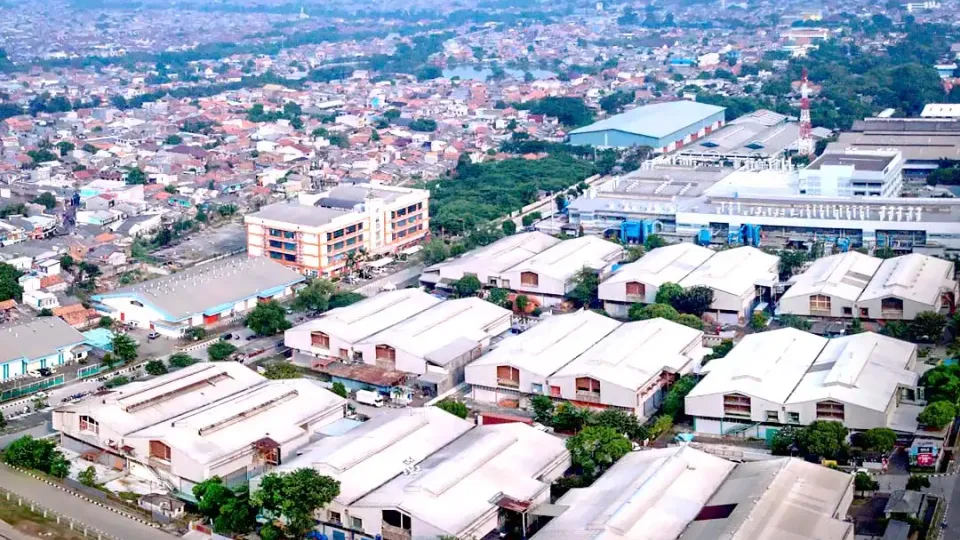
Jakarta Industrial Estate Pulogadung (JIEP) is part of Indonesia’s state-owned industrial estate ecosystem, which supports investment and industrial activity across six provinces: Batam, Medan, Jakarta, Makassar, Surabaya, and Semarang.
Across this network, industrial estates and participating companies offer investment opportunities, industrial products, facilities, and business support. The challenge was not a lack of value. It was that the value was difficult to discover through one clear source.
Suitmedia worked with JIEP between 2020 and 2021 to develop an integrated website for BUMN Industrial Estate. The platform brought together information about industrial estates, participating companies, products, services, and promotional activities.
The result was a more accessible digital front door for the Indonesian Integrated Industrial Estate ecosystem—helping public audiences, business stakeholders, and prospective investors understand what the network offers and where to find it.
A Strong Industrial Network Was Hard to See as One Opportunity
1. Scale created communication complexity
BUMN industrial estates are spread across six provinces and support a wide range of industrial and investment needs. They provide locations, products, facilities, and business services for companies from Indonesia and abroad.
That geographic reach is a major strength. It also creates a communication problem: information can become fragmented across different estates, companies, regions, and marketing channels.
A prospective investor may want to understand the entire network before focusing on one location. A business stakeholder may want to search for a specific product or service. A public visitor may simply need a clear explanation of what BUMN Industrial Estate is and why it matters.
Without a shared digital destination, each audience must assemble that picture independently.
2. The network needed more than a corporate profile
The project was described as a need for an integrated website that could support promotion and marketing. But the underlying requirement was broader than publishing institutional information.
The platform needed to explain the role of BUMN Industrial Estate, present the profile and advantages of each industrial estate, and make the products and services of participating companies easier to find.
A website focused only on corporate information would establish context but offer limited practical value. A product catalog without a clear institutional story could make the network appear like a collection of unrelated offerings.
The experience had to connect both levels: the broader investment proposition and the specific products, services, companies, and locations that made that proposition tangible.
3. Visitors needed different ways to begin their search
The website would serve audiences with different levels of knowledge and different reasons for visiting.
Some visitors would arrive looking for a general overview. Others might already be interested in a region or industrial estate. Investors might want to compare locations, understand available capabilities, or identify companies and products relevant to their plans.
This meant the website could not be organized only around internal organizational structures. Visitors should not need to understand how the network was administered before they could find useful information.
The digital experience needed to be responsive, user-friendly, and secure so that people could access reliable information across devices and engage with the platform with minimal friction.
4. Fragmented information limited promotional impact
Marketing activity is less effective when audiences have nowhere coherent to continue their research. A campaign may create awareness, but if the destination is difficult to navigate or provides only partial information, interest can quickly disappear.
For BUMN Industrial Estate, the website needed to become more than a digital brochure. It had to give promotional activity a central destination and make the network’s collective value easier to understand.
The strategic question was simple: how could a complex, distributed industrial ecosystem become easier to discover, explore, and evaluate through one digital experience?
Centralizing Information Without Erasing Local Value
1. We made the network the primary experience
Suitmedia began with a clear principle: the platform should present the collective strength of the BUMN industrial estate network before directing visitors toward individual estates, companies, products, or services.
This required bringing marketing and corporate content into one centralized structure. Instead of asking visitors to navigate separate sources, the website allowed them to move from a network-level overview to more specific information.
Centralization also increased the visibility of participating companies. Their products could be discovered within the wider context of a state-owned industrial network rather than appearing as isolated offerings.
The goal was not to make every estate or company look the same. It was to make their relationship to the broader network clear.
2. We structured the experience around visitor intent
The platform supported two connected journeys. The first was learning about BUMN Industrial Estate and its participating locations. The second was discovering the products and services available across those locations.
This distinction shaped the content structure and navigation. Visitors could begin with general information and move toward greater detail as their interest became more specific.
The approach reduced the need for visitors to interpret the organization’s internal hierarchy. They could search according to their own needs—by location, industrial estate, company, product, or service.
This is particularly important during the early stages of investment research. Before making contact, a potential investor often needs to understand what is available, where it is located, and whether it appears relevant to a specific business objective.
3. The product locator map made location useful
The homepage included a product locator map that displayed products associated with different companies and industrial estates.
Location is central to industrial activity. A visitor may not begin with a company name or a specific product. They may begin with a province, an industrial zone, or a need to understand what is available in a particular region.
The map turned the network’s geographic distribution into a discovery tool. Rather than experiencing six provinces as separate information sources, visitors could explore them as connected parts of one industrial ecosystem.
This also gave users a more intuitive way to begin their search. They could use place as an entry point and then move toward relevant companies, products, and services.
4. We gave products and services a clear destination
The “Products and Services” section provided a dedicated space for detailed information about offerings across the network.
This prevented commercial information from being buried inside general corporate descriptions. Visitors interested in a specific offering could move directly to a more focused view.
The section also created a logical progression from awareness to consideration. A user could first understand the role of BUMN Industrial Estate, then explore what the participating companies and estates actually provide.
The principle was to present information progressively: establish context first, then provide detail when visitors are ready to evaluate an opportunity.
5. We balanced a common structure with local distinctiveness
A centralized website needs consistency. If every organization presents information differently, the platform becomes difficult to navigate and compare.
At the same time, industrial estates and companies have different locations, products, capabilities, and advantages. Treating them as identical would remove information that matters to visitors.
The platform therefore needed a shared structure that could accommodate different types of content while preserving the relevant distinctions between participating organizations.
This balance improved usability and created a more maintainable foundation. New products, companies, and promotional materials could be added within an established framework instead of requiring separate digital solutions.
6. The platform was designed for access and trust
Suitmedia developed the website to be responsive, user-friendly, and secure. Each decision supported the platform’s role as an official and public-facing source of information.
Responsiveness made the experience accessible across devices. Clear navigation reduced the effort required to find estate, company, product, and service information.
Security helped establish confidence in the platform as a reliable institutional destination. For a state-owned industrial network, the website needed to communicate dependability as well as opportunity.
These were not isolated technical requirements. A difficult-to-use or unreliable platform would weaken the credibility of the information it contained.
7. We connected promotion with useful content
The website was designed to support marketing and promotional activity, but the platform did not rely on promotion alone.
Marketing creates value when it leads audiences to information that helps them understand and assess an opportunity. By combining promotional content with estate profiles, product information, and company details, the platform gave visitors a reason to continue exploring.
This created a shared digital front door for the network. Future campaigns, stakeholder communications, and promotional activities could direct audiences to one structured destination.
The second-order effect was greater coordination. Different participating organizations gained a common platform through which their individual offerings could contribute to one larger story.
A Single Platform Made the Network Easier to Discover
1. Information, marketing, and promotion became more connected
The website became an important tool for integrating information and marketing activity across BUMN Industrial Estate.
Its value was not simply that it contained a large amount of content. It connected information that visitors might otherwise have had to find separately.
Through one platform, users could learn about the industrial estate network, explore its locations, find participating companies, and review products and services.
The website did not remove the complexity of the network. It gave that complexity a clearer structure and a more accessible entry point.
2. Visitors gained more direct paths to relevant information
The product locator map and “Products and Services” section supported different visitor behaviors.
A user could begin with a location, an industrial estate, a company, or a product interest. That flexibility made the website useful to audiences at different stages of research.
For prospective investors, the platform created a more informed starting point. It could not replace detailed evaluation or direct engagement, but it reduced the effort required to understand the available industrial ecosystem.
This matters because early research often determines whether an opportunity receives further attention.
3. Early usage showed that the platform was being found
After launch, the website recorded 197 new users and more than 3,000 pageviews.
These results provide early evidence that the platform attracted visitors and served as a source of information about the industrial estate network. They do not independently demonstrate investment conversion, but they confirm that the website created a measurable channel for audience reach.
The platform also gave future marketing activities somewhere meaningful to lead. Rather than directing audiences across separate sources, promotional efforts could bring them to one central destination.
4. The website created a foundation for continuous improvement
A centralized platform makes it possible to learn from audience behavior over time.
The organization can examine which estates receive attention, which products attract interest, which pages support deeper exploration, and where visitors stop engaging. These insights can inform future content priorities and promotional activity.
That turns the website into more than a completed deliverable. It becomes a foundation for improving the way the network explains itself and responds to stakeholder needs.
5. The network became easier to understand as one connected system
The platform helped BUMN Industrial Estate move from a set of distributed information sources toward a more coherent public-facing presence.
Visitors did not need less information. They needed a clearer way to connect the information that already existed.
By organizing the network around location, products, services, and estate profiles, the website made the collective opportunity easier to discover without hiding the distinct value of each participating organization.
What This Project Reveals About Digital Platforms for Complex Organizations
1. Centralization creates value when it improves discovery
A shared platform is useful when it helps people understand how different organizations, locations, and offerings fit together.
Centralization should not mean placing every piece of information into one undifferentiated repository. It should mean creating a clear path through that information.
For BUMN Industrial Estate, the network overview, estate profiles, product locator, and product details worked together to provide that path.
2. The structure should follow stakeholder decisions
Visitors rarely search according to an organization’s internal reporting lines. They search by location, product, capability, service, and opportunity.
The website became more useful because its structure reflected those questions. The map and product section supported how a visitor might naturally begin evaluating the network.
The broader lesson is to design from the outside in: start with what stakeholders need to understand and decide, then build the digital structure around those needs.
3. A public website can also improve internal coordination
The platform served external audiences, but it also created a shared framework for organizations contributing information.
A common structure makes it easier to present a consistent network-level story and identify information that is missing, outdated, or difficult to compare.
This means a public website can also become an internal coordination mechanism—provided ownership and content responsibilities are clearly defined.
4. Content governance determines whether centralization lasts
A centralized platform remains valuable only when its information stays accurate and relevant.
Product details, estate profiles, company information, and promotional content need clear ownership and regular review. Otherwise, the platform can gradually lose credibility even if its technical foundation remains sound.
The website should therefore be treated as an ongoing business asset, not a project that ends at launch.
5. Early metrics should lead to better questions
New users and pageviews provide useful evidence of reach, but they are only the beginning.
The more important questions are behavioral: Which products attract attention? Which locations are explored? Where do visitors leave? Which content helps them continue toward inquiry?
Answering these questions can help the organization improve navigation, content, and future stakeholder engagement.
Strategic Insights for the C-Suite
- Use digital centralization to make distributed value visible.
When a business operates across multiple locations or entities, a shared platform can turn fragmented strengths into one understandable proposition. The goal is not to erase differences, but to show how the parts work together. - Organize digital experiences around stakeholder decisions.
People search for locations, products, capabilities, and opportunities—not internal departments. Designing around those questions makes complex organizations easier to understand and easier to engage. - Treat a website as an operating asset, not a corporate brochure.
A central platform can support marketing, discovery, content governance, and coordination at the same time. Its value grows when ownership and continuous improvement are part of the operating model. - Use early usage data to guide the next stage of growth.
New users and pageviews show whether a platform is attracting attention. Behavioral data reveals what audiences actually need and where the experience should improve.