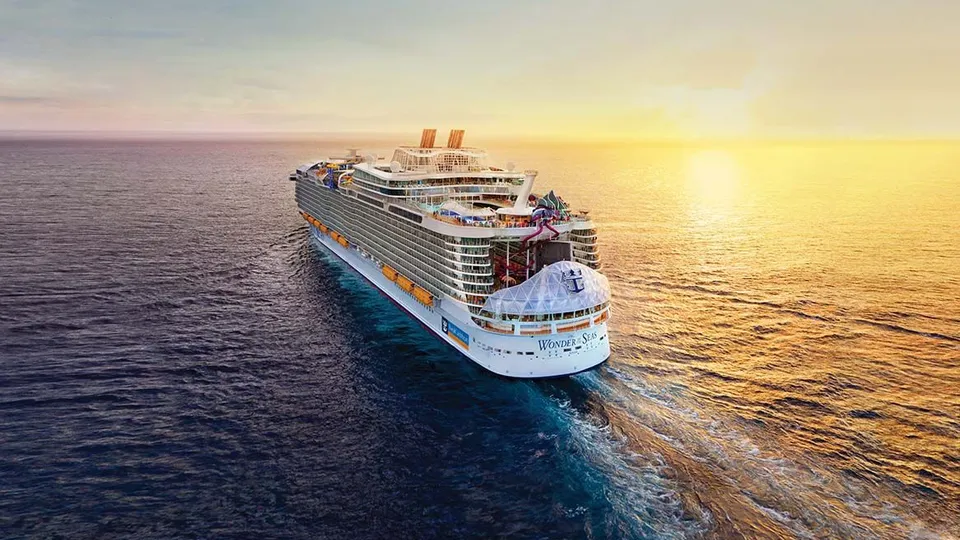
Royal Caribbean has offered international cruise experiences since 1969, combining accommodation, dining, entertainment, activities, and travel across more than 300 destinations in the Caribbean, Mexico, Europe, and Asia.
For Indonesian audiences, however, cruising is a category that still requires explanation. People may understand hotels, flights, and land-based holidays, but they may not yet know what a cruise feels like, who it is suitable for, or what happens during the journey.
Royal Caribbean Asia partnered with Suitmedia in 2023 to expand the brand’s visibility in Indonesia through KOL collaboration and digital advertising.
The goal was not simply to generate exposure. It was to make the cruise experience easier to imagine by showing it through trusted creators with different areas of relevance: travel, family lifestyle, couples, food, and entertainment.
A Global Cruise Brand Needed Local Context and Credibility
1. International scale did not automatically create Indonesian relevance
Royal Caribbean had a strong global reputation and an extensive range of destinations. Its ships offered activities, shows, dining, and entertainment for adults and children.
But global scale does not explain a product to every local audience. Indonesian travelers may have questions about how cruising works, what is included, how the itinerary unfolds, and whether the experience is suitable for their lifestyle or family.
These questions are important because a cruise is not a simple product purchase. It is a complete travel format that combines transport, accommodation, activities, meals, and destinations.
The brand needed to show the experience in a way that felt understandable and credible to Indonesian audiences.
2. Cruise travel is difficult to communicate through claims alone
A description such as “luxury cruise” or “unforgettable holiday” can create interest, but it does not answer the practical questions that influence consideration.
Potential customers may want to know what they can do on the ship, how much time is spent at sea, what the rooms are like, what food is available, and how families or couples can spend their time.
These details are difficult to communicate through static promotional messages alone.
Royal Caribbean needed content that allowed audiences to observe the experience. They needed to see the ship, follow the itinerary, understand the activities, and hear personal impressions from people they already trusted.
3. Different audiences needed different reasons to care
Royal Caribbean’s audience was not one uniform group.
Travel enthusiasts might focus on destinations and itinerary details. Families might care about activities for children, convenience, safety, and the overall experience for different age groups. Couples might be more interested in food, entertainment, and shared moments.
A single creator or message would not communicate all of these dimensions equally well.
The campaign needed a portfolio of voices that could show the cruise experience from different perspectives. Creator selection therefore had to be based on relevance and credibility, not only on follower count.
4. Awareness needed to lead toward consideration
The campaign’s purpose was to increase visibility among Indonesian audiences, but reach alone would not be enough.
A viewer might see a cruise video and enjoy it without understanding what Royal Caribbean offered or where to learn more. The campaign needed to move people from awareness toward curiosity and consideration.
This required content with different levels of depth. Short-form video could create initial interest, while long-form content could help users evaluate the experience more seriously.
Digital advertising could then extend selected content beyond the creators’ existing followers and reach new potential audiences.
5. The product required several interactions before trust could develop
High-consideration travel decisions are rarely made after one exposure.
People may first see a short video, later watch a longer vlog, search for the brand, discuss the experience with family, and eventually explore booking information.
The campaign therefore needed to support repeated, consistent exposure without repeating the same message mechanically.
Each interaction had to contribute something different: immediacy, detail, inspiration, practical context, or social proof.
Showing the Cruise Experience Through the Right Voices
1. We selected creators according to the questions they could answer
Suitmedia recommended creators whose existing content aligned with different parts of the cruise proposition.
- Leonardo Edwin brought travel credibility and could explain destinations, itineraries, and the broader cruise experience.
- Molita Lin offered a lifestyle and family perspective, helping audiences understand how the cruise could work for households and different age groups.
- Ken & Grat brought a couples and food perspective, highlighting dining, shared leisure, and the social side of being on board.
This mix helped Royal Caribbean communicate breadth without forcing the brand into one generic story.
The creators showed that a cruise could appeal to different types of travelers for different reasons.
2. We treated KOL selection as a trust decision
Influencer marketing is most effective when the partnership feels like a natural extension of the creator’s existing content.
A travel creator can explain an itinerary without sounding disconnected from their audience. A family creator can discuss the practical experience of traveling with children. A food-focused couple can make dining and shared experiences more tangible.
This alignment helped reduce the distance between sponsored content and ordinary creator communication.
For Royal Caribbean, this was especially important because the campaign needed to educate audiences about a travel format that may not yet be familiar to them.
3. We used multiple formats for different levels of attention
The campaign included Instagram Stories, Instagram Reels, TikTok content, and YouTube videos.
Each format served a different role:
- Instagram Stories provided real-time updates and immediate impressions.
- Instagram Reels created short, visual content for discovery and sharing.
- TikTok extended short-form content to a platform built around rapid discovery.
- YouTube allowed creators to explain itineraries and experiences in greater depth.
This created a layered journey. A user might encounter a short video first, then watch a longer vlog after becoming curious.
The strategy recognized that awareness and consideration require different kinds of content.
4. We allowed creators to communicate through their own strengths
The creators did not present identical versions of the same campaign.
Leonardo Edwin’s cruise content provided detailed insight into the journey and itinerary. His approach helped viewers understand what the cruise experience looked like in practice.
Molita Lin’s content focused on family-friendly experiences, showing how the cruise could serve parents and children.
Ken & Grat approached the experience through couples and food content, making dining and shared activities more visible.
These differences increased the campaign’s credibility. Each creator answered questions their audience already expected them to answer.
5. We used real-time content to reduce uncertainty
Stories and other real-time formats helped audiences see the experience as it happened.
This type of content can answer questions polished brand material may not address. Viewers can observe the environment, activities, dining, entertainment, and daily rhythm of the cruise.
Real-time content also creates a stronger sense of proximity. Audiences do not simply hear that the cruise is enjoyable; they can follow someone’s experience while it is taking place.
For an unfamiliar travel category, that immediacy can reduce uncertainty and make the product easier to imagine.
6. We connected content to itinerary and experience details
The creators’ content included practical insight into cruise experiences and itineraries.
This helped connect emotional inspiration with useful information. Viewers could enjoy the destination and onboard content while also understanding how the trip was structured.
That balance was important. Inspiration creates desire, but detail supports evaluation.
A potential customer could move from “This looks interesting” to “I understand what the journey includes and whether it may suit me.”
7. We amplified selected content through digital advertising
Suitmedia proposed amplifying Instagram Reels and TikTok content from Leonardo Edwin and Molita Lin.
Organic creator content benefits from an existing relationship between the creator and their audience. But its reach is naturally limited if it is shown only to current followers.
Paid amplification extended selected content to broader potential audiences, including people who might not already follow the creators or know Royal Caribbean.
The decision to amplify specific content created a more focused relationship between organic credibility and paid reach.
8. We used targeted audiences to improve the value of paid media
Digital advertising was supported by audience segmentation and optimization.
This helped Royal Caribbean reach people more likely to be interested in travel, family holidays, lifestyle content, or cruise experiences.
The purpose was not simply to increase impressions. It was to place relevant content in front of audiences who could potentially move from curiosity toward consideration.
Targeting also helped the brand avoid relying only on broad exposure in a category where the audience may need more precise education.
9. We managed creator collaboration as an ongoing process
KOL management required coordination across creators, content formats, platforms, and campaign objectives.
Suitmedia managed collaborations with Leonardo Edwin and Ken & Grat, while Molita Lin’s digital advertising activity was ongoing at the time of reporting.
This distinction is important. Results from completed creator management initiatives could be assessed, while ongoing activity needed to be treated as work still in progress.
The management process helped align creator output with Royal Caribbean’s goals without removing the individual voice that made the content credible.
10. We designed a connected path from discovery to consideration
The campaign created several possible audience journeys:
- A user encounters a short Reel or TikTok.
- The content creates curiosity about cruise travel.
- The user watches a longer YouTube vlog.
- The user learns about itineraries, activities, and the onboard experience.
- The user continues to Royal Caribbean’s official channels for more information.
This structure supported a more realistic path to travel consideration.
The objective was not to force an immediate booking decision. It was to give audiences enough exposure and information to evaluate the experience with greater confidence.
From Brand Awareness to Measurable Audience Interest
1. KOL content generated substantial organic reach
Across the organic KOL activity involving Leonardo Edwin and Ken & Grat, the reported results included:
- Instagram: 2,488,114 impressions, 7,281,918 reach, 7,317,696 video plays, 424,630 post engagements, and 4,592 link clicks.
- YouTube: 13,202,711 impressions, 948,605 views, and 23,704 post engagements.
- TikTok: 3.8 million views and 303,300 post engagements.
These results showed that creator content could reach large audiences while generating meaningful interaction.
The campaign was not dependent on one platform or one audience behavior. Instagram supported visual reach and clicks, YouTube supported deeper viewing, and TikTok supported short-form discovery and engagement.
2. Leonardo Edwin’s content gained additional visibility
Leonardo Edwin’s cruise vlog reached the number-eight position on YouTube Trending.
This was a significant visibility signal because it indicated that the content attracted attention beyond a narrowly defined campaign audience.
Trending exposure can also create secondary discovery. Viewers who were not already following the creator or Royal Caribbean could encounter the video through the wider YouTube environment.
The result demonstrated that detailed cruise content could generate broad interest when presented through a credible travel creator.
3. Paid amplification expanded the audience beyond existing followers
The reported digital advertising results for Leonardo Edwin included:
- Instagram: 3,256,065 impressions, 2,171,918 reach, 14,455 post engagements, 2,492,129 video plays, and 2,955 link clicks.
- TikTok: 2,170,437 impressions, 1,532,766 reach, 7,629 post engagements, 2,118,664 video plays, and 6,302 link clicks.
These results showed the role of paid distribution in extending creator content to broader audiences.
Advertising helped Royal Caribbean increase exposure while maintaining the credibility of content created through a trusted creator partnership.
4. Different creator niches produced different forms of proof
Ken & Grat’s food-focused content helped audiences understand the dining and shared leisure dimensions of a cruise.
Leonardo Edwin’s travel vlogs provided detailed itinerary and experience information. Molita Lin’s content highlighted family-friendly aspects of the journey.
Together, these formats created a richer body of evidence than a single generic advertisement could provide.
The campaign showed not only that Royal Caribbean was a travel brand, but also how the cruise experience could fit different lifestyles.
5. The campaign made cruise travel more familiar
The most important qualitative result was greater familiarity.
Audiences could see what happened on board, how the itinerary worked, what types of activities were available, and how different travelers experienced the trip.
This helped reduce the distance between the Indonesian audience and an international cruise product.
Even users who were not immediately ready to book gained a clearer understanding of the category, creating a stronger foundation for future consideration.
6. Royal Caribbean gained a repeatable model for local market education
The campaign established a useful model for promoting experience-led travel in Indonesia:
- Select creators according to audience questions.
- Use short-form content to create discovery.
- Use long-form content to support evaluation.
- Amplify relevant content through paid media.
- Direct interested users toward official brand channels.
- Measure reach, engagement, views, and clicks across platforms.
This model could be adapted for future destinations, cruise launches, seasonal offers, and audience segments.
What Royal Caribbean Reveals About Creator-Led Travel Marketing
1. The right creator explains the right part of the product
Creator value is not determined by audience size alone.
The strongest partnership matches the creator’s expertise and audience expectations with the questions the product needs to answer.
2. Experiential products require visible evidence
People need to imagine a cruise before they can seriously consider one.
Creator content provides evidence through real environments, activities, itineraries, and personal reactions.
3. Short- and long-form content should work together
Short video creates curiosity. Long-form content supplies context.
Using both formats supports different levels of attention and helps audiences move from discovery toward evaluation.
4. Paid media should extend credible content
Paid amplification is more effective when it supports content that already communicates naturally through the creator’s voice.
Advertising should expand the reach of relevant evidence rather than compensate for content that audiences do not understand or value.
5. Authenticity comes from fit and freedom within structure
Creator campaigns need clear objectives and deliverables, but creators also need room to communicate through their established style.
Authenticity comes from the relationship between brand purpose, creator credibility, and audience expectation.
6. High-consideration travel requires repeated exposure
A single post may create awareness, but several connected interactions are more likely to build understanding and intent.
Campaigns should be evaluated as journeys rather than isolated pieces of content.
Strategic Insights for the C-Suite
- Select creators according to the questions they can answer.
Reach matters, but audience fit and subject credibility matter more when the product requires education. Match each creator to a specific audience need. - Demonstrate unfamiliar experiences through real content.
When customers do not fully understand a product, personal observation can be more persuasive than brand claims. Show how the experience works before asking audiences to buy. - Use multiple formats to support different levels of attention.
Short-form video creates discovery, while long-form content supports evaluation. A connected format strategy is stronger than relying on one content type. - Amplify content that already earns trust.
Paid media should extend creator content that fits the audience and brand naturally. This creates a more disciplined link between influencer investment and advertising reach. - Measure the journey from awareness to consideration.
Impressions, reach, views, engagements, and clicks each reveal a different stage of performance. Combine them to understand whether the campaign is making the product more familiar and more seriously considered.
Embed YouTube