When Market Access Becomes a National Development Priority
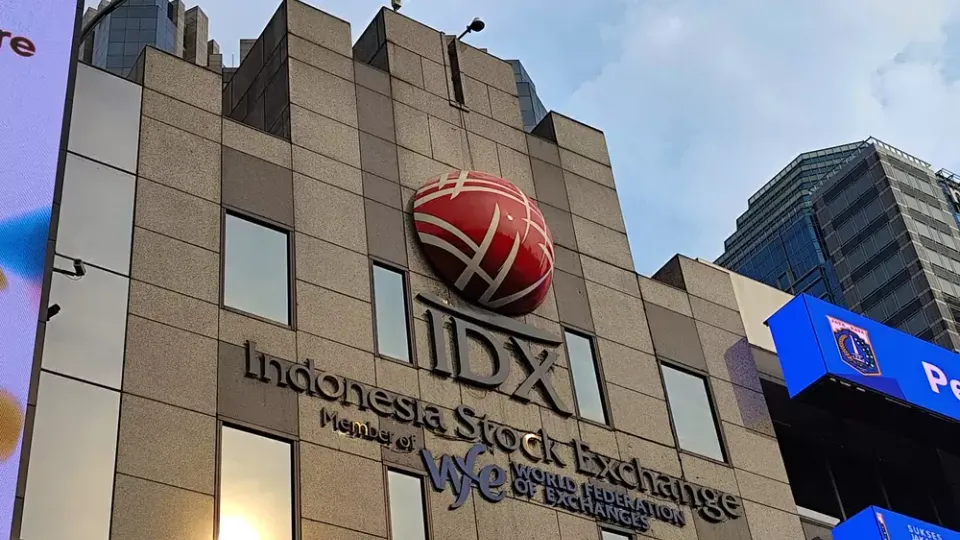
Indonesia Stock Exchange operates at the intersection of capital formation and national economic development. As Southeast Asia's largest stock exchange by market capitalization, IDX doesn't just facilitate transactions—it channels capital to productive investments, creates wealth-building opportunities for citizens, and signals investor confidence in Indonesia's future. Yet for most of Indonesia's population, the capital market remained opaque and inaccessible. Trading felt like an elite activity. Market information was scattered. Educational resources were fragmented. The exchange had excellent operational infrastructure but struggled to communicate its purpose and possibilities to the broader public.
IDX's leadership recognized a strategic imperative: market growth depends on participant growth. More retail investors mean more market liquidity and deeper capital pools. More listed companies mean more capital-raising opportunities and broader wealth creation. But neither happens without solving a prior problem: accessibility. How do citizens understand that stock market participation is relevant to them? How do they find information they need? How do they overcome the psychological barrier that capital markets are for sophisticated investors only?
These weren't technical problems. They were communication and design problems. Suitmedia was engaged in 2015 to address them—and the engagement evolved into a comprehensive eight-year digital transformation partnership that would eventually touch every customer-facing and operational dimension of IDX's business.
Five Strategic Fractures in Market Accessibility and Operations
IDX's digital challenges extended across multiple dimensions, each creating friction in different ways.
1. Market Information Is Technically Available But Practically Inaccessible
IDX published extensive market data—stock indexes, trading volumes, company information, news, analysis. But this information was scattered across an outdated website with confusing navigation. A retail investor wanting to understand whether a stock was suitable for them faced barriers: finding the stock, understanding its performance, accessing company information, interpreting financial metrics. The website had everything but made nothing obvious. Information existed in abundance but accessibility was poor.
Mobile was barely considered. In 2015, most retail investors in Indonesia accessed the internet primarily through phones. Yet IDX's website was desktop-focused, creating friction for the primary user base. A potential investor checking stock prices during a commute would have a miserable experience, discouraging engagement.
2. Investor Education Is Fragmented and Difficult to Access
Capital market literacy is the foundation of market growth. But IDX's educational resources were scattered—some in documents, some on websites, some in offline materials. A citizen wanting to learn about investing faced a fragmented experience. There was no coherent learning pathway. No clear progression from fundamentals to advanced concepts. No engagement mechanisms beyond static content.
The educational gap was particularly acute for retail investors and historically underrepresented populations. The capital market felt like an exclusive club, not an inclusive opportunity.
3. Internal Trading Operations Lack Modern Infrastructure
Behind IDX's public face is complex operational infrastructure managing billions of dollars in daily transactions. The Trading Operation Support System (SPOP) was aging. It required manual processes, lacked automation, and didn't integrate well with broader systems. This created operational friction—errors, inefficiencies, delays. In a financial market, operational friction translates directly into lost opportunity and increased risk.
4. Regional Information Systems Are Disconnected
IDX operates investment galleries across Indonesia's regions—physical spaces where citizens can learn about and access capital markets. But these galleries operated with disconnected information systems. There was no unified way to track activities, share best practices, or evaluate performance. Regional effectiveness was invisible, preventing optimization and learning.
5. Capital Formation Messaging Is Weak and Unclear
For companies considering going public, IDX's positioning and messaging were unclear. What does IPO actually involve? How do companies benefit? What's the process? Companies lacked clear, compelling information about capital market funding. This suppressed IPO activity and the broader market development that comes from diverse listed companies.
Building Digital Infrastructure for Market Democratization
Suitmedia approached the IDX partnership with a strategic thesis: digital transformation isn't about technology; it's about making sophisticated systems accessible to broader populations.
The engagement involved multiple parallel initiatives, each addressing specific fractures while contributing to an integrated digital ecosystem.
Initiative 1: Web Platform Development—Information Made Obvious
The redesigned IDX website inverted the information architecture from institution-centric to user-centric. Rather than organizing around IDX's internal structure, it organized around what investors actually needed to know: current market status, company information, trading data, news, educational resources.
Mobile-first design was foundational. Suitmedia recognized that Indonesia's retail investors would access the market primarily through phones. The new website was optimized for small screens, fast loading, and thumb-friendly navigation. Desktop users got a progressively enhanced experience, but mobile wasn't an afterthought—it was the primary design constraint that drove simplification.
The homepage became a dashboard for investor decision-making. Current stock indexes appeared immediately. Market overview with key metrics was prominent. Recent news was featured. Quick links to high-value features—stock search, company information, educational resources—were obvious. A user arriving at the site could understand market status and access relevant information within seconds.
Information architecture followed mental models rather than institutional structure. Rather than navigating "Securities > Stocks > Individual Company," users saw "Explore Companies > Search > View Details." Rather than "Information > Market Data > Historical Data," they navigated "Analyze Stocks > Historical Performance." The site reflected how investors thought about their decisions, not how IDX organized its information.
The addition of IDX Syariah pages served a strategic purpose. Islamic finance is rapidly growing in Indonesia. By providing dedicated resources about Islamic stocks, Sukuk, and OJK-compliant mutual funds, IDX demonstrated understanding of market segmentation and religious diversity. This wasn't just corporate responsibility—it was market expansion.
The results were immediate and substantial. Bounce rates dropped below 45% (from typical 55%+), indicating users were finding relevant information rather than leaving in frustration. Pages per session exceeded 3, meaning users were exploring multiple areas. Average session duration surpassed 4 minutes, indicating sustained engagement. These metrics proved that the redesigned website was connecting with users rather than frustrating them.
The "Yuk Nabung Saham" (Let's Save Through Stocks) campaign microsite demonstrated the power of focused design. A dedicated microsite for this investor education campaign generated over 712,000 impressions and 63,000 engagements within 10 days. Users weren't just viewing—they were engaging, indicating the message and interface resonated.
Learn more: IDX: Reclaiming Leadership in a Mobile-First Market
Initiative 2: Education Portal Strategy—Building Learning Infrastructure
Recognizing that market growth depends on investor literacy, Suitmedia conducted extensive UX research to inform the design of IDX's Investor Education Portal (LMS). This wasn't about building another content repository. It was about creating a learning ecosystem that would serve investors at different experience levels and learning styles.
The research phase was critical. Suitmedia conducted qualitative and quantitative research to understand investor needs: What do people actually want to learn about? In what sequence? Through what formats? What barriers prevent participation? The research revealed five-year learning progression pathways and identified specific investor segments with different educational needs.
The research informed a comprehensive digital strategy: Grand Design for the portal architecture, brand positioning to differentiate it from competitor educational offerings, and a digital marketing roadmap to drive adoption. This wasn't just UX design—it was strategic platform planning based on deep user understanding.
The research-informed strategy meant the education portal would be built around actual learner needs rather than assumed needs. Content would be sequenced logically. Format variety would accommodate different learning styles. The platform would evolve intentionally toward identified five-year goals rather than growing reactively.
This disciplined approach to educational platform design created the foundation for genuine learning progression rather than scattered content.
Learn more: IDX: Designing the Foundation for a More Informed Investor Community
Initiative 3: Trading Operations Enhancement—Reliability as Strategic Asset
While improving public-facing digital experiences, Suitmedia also upgraded IDX's internal trading infrastructure. The SPOP+ system represented a comprehensive modernization: higher availability, improved performance, enhanced security.
The operational improvements had strategic consequences. Automation reduced manual errors. Integration between SPOP and IDXNET eliminated data inconsistencies. Enhanced cryptographic key management and authentication improved security. The result was a trading infrastructure that was faster, more reliable, and more secure—critical attributes for a market infrastructure organization.
These operational improvements were invisible to retail investors but essential to market functionality. Faster, more reliable trading operations meant better execution for investors. Enhanced security meant better data protection. The infrastructure modernization supported the broader digital transformation by creating operational reliability that allowed IDX to scale confidently.
Learn more: IDX: Building a More Integrated and Secure Trading Operations Backbone
Initiative 4: Regional Information System—Democratizing Market Access
IDX operates investment galleries across Indonesia's regions—physical spaces in cities nationwide where citizens can access capital market education and participate in trading. These galleries were generating valuable activity data—workshops conducted, visitors, learning outcomes—but the information was scattered.
Suitmedia designed the Regional Development Information System (RDIS) to integrate both public-facing and internal dimensions: a website where investors could find gallery locations and information, and an internal system where IDX could track activities, evaluate performance, and share best practices.
The unified system had a strategic impact. For the first time, IDX had visibility into regional market development: 25,000+ regional investment activities, 700+ registered investment galleries, 300+ active exchange member registrations. This visibility enabled optimization. Which gallery types were most effective? Which learning formats drove the highest engagement? How could best practices be replicated across regions?
The RDIS democratized market access by making investment opportunities visible across Indonesia's geography. Citizens in smaller cities could now find local resources and access capital market participation without traveling to major financial centers. Market participation became geographic-inclusive rather than concentrated in Jakarta.
Learn more: IDX: Connecting Regional Investment Education Through One Information System
Initiative 5: Go Public Website—Capital Formation Communication
For companies considering IPO, IDX needed to communicate opportunity clearly and facilitate the early relationship-building that precedes formal listing. The Go Public website served this purpose: bilingual interface supporting two-way communication between IDX and prospective listed companies.
The website made the IPO process less mysterious. Companies could understand requirements, access educational content, register for workshops, and book advisory sessions. Interactive features reduced friction in early-stage exploration. Dynamic content management allowed IDX to keep information current and relevant.
The impact was visible in market participation. IPO activity increased from 59 companies in 2022 to 79 in 2023—a 34% increase directly correlating with improved capital formation communication and IDX's digital transformation efforts more broadly.
Learn more: IDX: Making Capital Market Funding Easier to Understand
Systemic Impact: Market Growth Through Digital Accessibility
The accumulated effect of these initiatives was a fundamental shift in how Indonesia's capital market functioned and who could participate in it.
1. Retail Investor Accessibility Improved Exponentially
The combination of mobile-optimized websites, clear information architecture, educational resources, and regional infrastructure meant capital market participation became accessible to millions of citizens previously excluded by information barriers. A retail investor with a phone could now access market information, understand opportunities, find educational resources, and locate regional support. The market became genuinely inclusive rather than elite.
2. Market Liquidity Expanded Through Broader Participation
More accessible markets attract more participants. The improved digital experience drove increased retail investor participation, increasing market liquidity and depth. Broader investor participation meant companies could raise capital more efficiently and investors had more opportunities.
3. Operational Reliability Supported Market Growth
Enhanced trading infrastructure meant IDX could handle increased volume and complexity without sacrificing speed or security. Operational improvements created capacity for growth.
4. Regional Development Became Measurable and Optimizable
With unified information systems, IDX could see what was working regionally and replicate success. Investment galleries became more effective through data-informed optimization. Regional market development accelerated as best practices became visible and shareable.
5. Capital Formation Accelerated
Improved communication about IPO opportunities and clearer pathway from consideration to listing increased company participation. The 34% increase in IPO activity represented real capital being deployed to productive investments across the economy.
6. Market Credibility and Sophistication Improved
Modern digital infrastructure signals market maturity. Investors saw a sophisticated, contemporary platform. Companies saw professional capital formation infrastructure. International investors saw a premier Southeast Asian exchange. Digital modernization enhanced IDX's competitive positioning globally.
Three Principles That Generalize Beyond IDX
1. Market Access Is Fundamentally About Information Design
Financial markets operate on information asymmetry. Those with better information make better decisions. Capital market growth depends on democratizing information access. Suitmedia's approach—making complex information accessible through thoughtful design—applies to any system where information barriers limit participation. The principle: design for accessibility first, comprehensiveness second.
2. Digital Transformation of Infrastructure Requires Simultaneous Attention to Public Experience and Operational Systems
Many organizations treat public-facing and operational systems as separate concerns. IDX's transformation succeeded because both received equivalent investment. Improved public experience drove investor growth. Improved operational systems enabled that growth to be served reliably. Systemic digital transformation requires coordinated improvement across customer-facing and operational dimensions.
3. Regional Inclusivity Requires Intentional System Design
Many digital transformations concentrate benefits in major urban centers where sophisticated users congregate. IDX's approach was explicitly inclusive: regional information systems, local investment galleries, multilingual interfaces. Inclusive design requires intentional choices about accessibility, geographic distribution, and language support. Markets that grow fastest are those that enable participation from diverse regions and backgrounds.
Strategic Insights for the C-Suite
- Infrastructure Modernization Is Often Strategic, Not Just Operational
Organizations often treat infrastructure upgrades as necessary but not strategically important. IDX's experience demonstrates that infrastructure is strategy. A modern, reliable trading system creates capacity for growth. A robust, scalable digital platform enables market expansion. For any institution where infrastructure supports market-facing activities, infrastructure decisions are strategic decisions with direct business impact. - Market Growth Depends on Accessibility, Not Just Product Quality
IDX has always offered quality market access. What changed wasn't product quality; it was accessibility. A stock market with modern digital infrastructure serves 10x more participants than one without. This principle applies broadly: market growth typically depends on accessibility and usability more than on product excellence. The best products with poor access underperform accessible products with adequate quality. - Digital Transformation Requires Parallel Improvement Across Customer and Operational Dimensions
Organizations often choose between investing in customer experience and operational efficiency. The most successful transformations invest in both. Improved customer experience drives demand. Improved operational systems enable that demand to be served. Customer experience without operational capability creates frustration. Operational efficiency without customer demand is wasteful. Strategic digital transformation addresses both simultaneously. - Regional Inclusivity Is Economic Development, Not Charity
IDX's investment in regional accessibility wasn't philanthropic—it was strategic market development. Citizens in regional cities now have access to wealth-building opportunities. Companies in those regions can access capital markets. Economic opportunity becomes geographically distributed rather than concentrated in Jakarta. This creates broader economic development while simultaneously expanding IDX's addressable market. Inclusive design is economically strategic. - Long-Term Partnership Enables Continuous Evolution
Eight years of partnership with Suitmedia allowed IDX to evolve continuously rather than making discrete jumps. Initial web platform improvements laid the foundation for subsequent initiatives. Educational portal research informed portal design. Regional systems created data for optimization. Trading systems improvement enabled growth. Each initiative built on previous work. Organizations that maintain long-term partnerships with capable partners achieve greater transformation than those that execute isolated projects. - Digital Leadership Requires Understanding Both Technology and Human Behavior
IDX's digital transformation succeeded because it combined technical sophistication (modern infrastructure, secure systems, scalable platforms) with deep understanding of human behavior (mobile-first design, clear information architecture, accessible language, regional inclusivity). Technology alone wouldn't have driven adoption. Behavior change alone wouldn't have been possible without enabling technology. Strategic digital transformation requires leaders who understand both dimensions and can integrate them.